

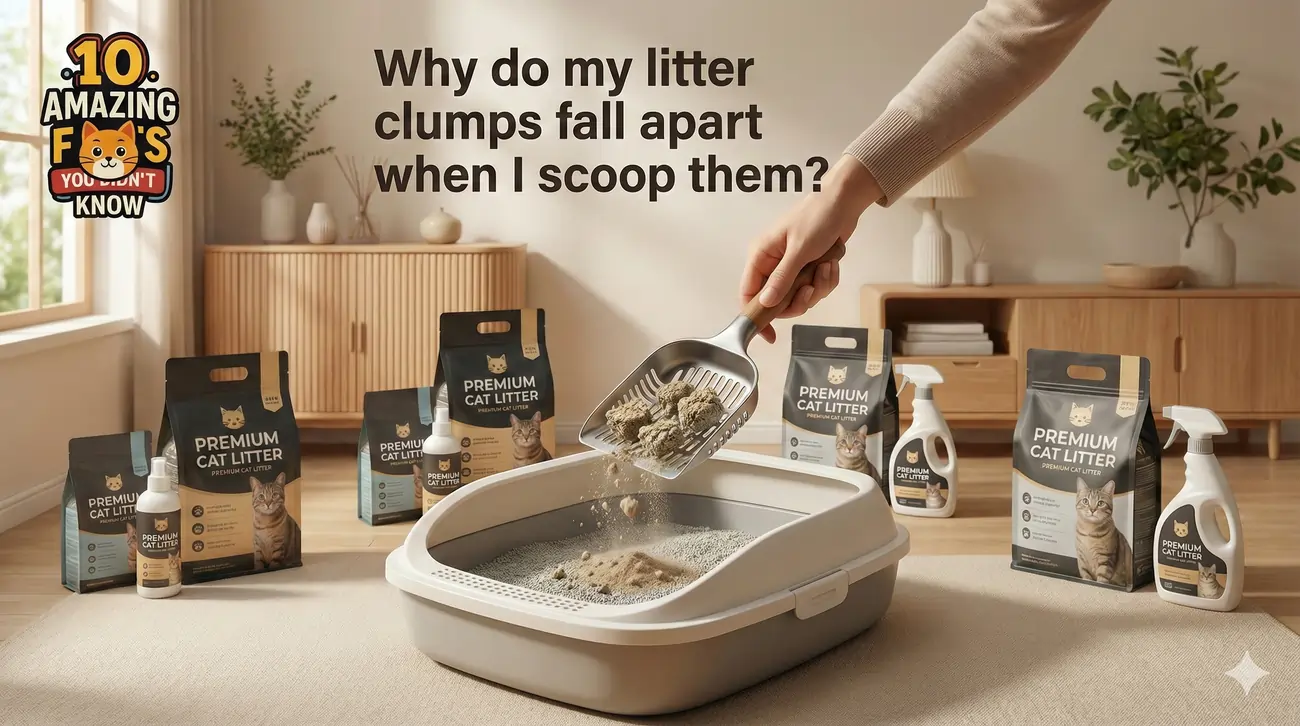
Why do my litter clumps fall apart when I scoop them?
Why Do My Litter Clumps Fall Apart When I Scoop Them? A Scientific Analysis
Maintaining a sanitary environment for a domestic feline is a foundational aspect of responsible pet ownership. However, one of the most persistent frustrations for cat owners is the structural failure of waste aggregates. You may find yourself asking: “Why do my litter clumps fall apart when I scoop them?” This is not merely a matter of convenience. When urine clumps falling apart occurs, small fragments of soiled material remain in the box, leading to bacterial growth, ammonia odors, and a degradation of the overall hygiene of the habitat. At 10 Amazing Facts You Didn’t Know About Cats, we prioritize factual accuracy and professional guidance to optimize your cat’s well-being. This guide explores the chemical, mechanical, and biological reasons behind weak litter clumps.
The Chemistry of the Clump: Sodium Bentonite Quality
The primary reason for crumbling cat litter often lies in the mineral composition of the product. Most high-quality clumping litters utilize sodium bentonite, a natural swelling clay.
1. Low Quality Clumping Litter
In low quality clumping litter, the concentration of high-grade sodium bentonite is often reduced or substituted with inferior “calcium bentonite” or fillers. Calcium bentonite does not swell to the same degree as its sodium counterpart, resulting in a fragile bond that shatters upon contact with a scoop.
2. Sodium Bentonite Quality and Saturation
Sodium bentonite quality dictates the litter saturation point. Every gram of clay has a finite capacity to absorb liquid. If the litter is saturated—meaning it has been in the box too long without being replaced—it loses its ionic ability to bind. This leads to old litter not clumping effectively.
Mechanical Failures: Why Your Scooping Technique Matters
Sometimes the issue is not the product, but the methodology. Structural integrity requires time and proper depth to solidify.
The Problem of Scooping Too Soon
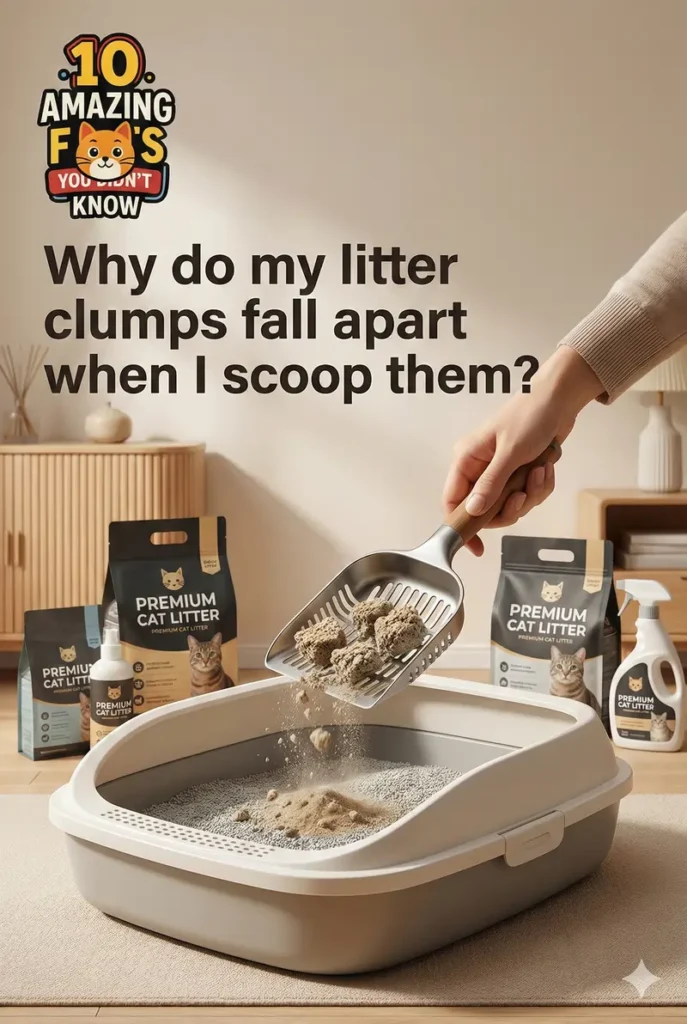
A common error is scooping too soon. Chemical bonding in clay litter is not instantaneous. It requires a “set time,” usually between 15 to 30 minutes, to form a dehydrated, hard mass. If you intervene immediately after the cat exits the box, you are effectively breaking the bond before it has cured, leading to litter breaking apart while scooping.
Litter Depth for Strong Clumps
To achieve strong clumping clay litter performance, you must maintain a litter depth for strong clumps of at least 3 to 4 inches. If the litter layer is too shallow, urine reaches the floor of the pan before it can be fully encapsulated by the clay. This creates “pancakes” or urine sticking to bottom of pan, which inevitably crumble when you try to pry them loose.
Environmental and Hardware Factors
The environment in which the litter box resides plays a critical role in the moisture-wicking process of the clay.
-
High Humidity Litter Box: If your litter box is located in a bathroom or a damp basement, the clay absorbs ambient moisture from the air. This reduces its capacity to absorb urine, leading to weak litter clumps.
-
Non-stick Litter Box vs. Scratched Surfaces: Over time, plastic litter boxes develop micro-scratches from claws and scoops. These grooves trap moisture and bacteria. Utilizing a non-stick litter box or a high-quality stainless steel basin can prevent clumps from anchoring to the sides and breaking during removal.
-
Litter Scoop Size: A scoop with gaps that are too wide will allow smaller fragments of crumbling cat litter to fall back into the box, while a scoop that is too flimsy will vibrate and shatter the clump.
Biological Indicators: When Your Cat’s Health is the Cause
If you have maintained a deep cleaning litter box routine and use the best hard clumping litter, yet the clumps still fail, the issue may be biological.
Cat Diabetes and Excess Urine
A significant factor in urine clumps falling apart is the volume of liquid. Conditions such as cat diabetes excess urine (polyuria) or chronic kidney disease result in the cat producing massive amounts of dilute urine. This volume can instantly exceed the litter saturation point of the immediate area, causing the clump to become a slurry rather than a solid.
Multi-cat Litter Box Problems
In households with multiple felines, the frequency of use prevents the litter from drying out. Multi-cat litter box problems often stem from the fact that one cat may urinate on or near a previous clump that hasn’t fully hardened, causing a “chain reaction” of structural failure.
Solutions for Hardening Cat Litter Clumps
To resolve the issue of clumps crumbling in scoop, consider the following professional maintenance routine:
-
Switch to High-Performance Clay: Seek out strong clumping clay litter specifically marketed for multi-cat strength.
-
Monitor Clay vs. Natural Litter Clumping: While eco-friendly, many corn, wheat, or wood-based litters have a lower tensile strength than clay. If clumping is your priority, clay remains the gold standard.
-
Optimize Depth: Ensure a consistent 4-inch depth to prevent bottom-sticking.
-
Regular Sifting: Implement a litter box maintenance routine that includes twice-daily scooping and a full monthly scrub-down of the physical box.
Frequently Asked Questions
Q: Does lightweight litter clump as well as traditional clay? A: Generally, no. Lightweight litter clumping issues are common because the lower density makes the clumps more susceptible to shattering under the weight of the scoop.
Q: How often should I replace the entire box of litter? A: Even with regular scooping, you should perform a deep cleaning litter box cycle every 2-4 weeks. Over time, the remaining “clean” litter becomes contaminated with microscopic waste particles, weakening the overall clumping ability.
Q: Why does my litter turn into mud? A: This usually indicates that the litter saturation point has been reached or the sodium bentonite quality is insufficient to handle the volume of liquid.
Litter & Housebreaking


One thought on “Why do my litter clumps fall apart when I scoop them?”
Comments are closed.