

Why do cats make biscuits on their owners?
Why Do Cats Make Biscuits on Their Owners? A Scientific and Behavioral Explanation
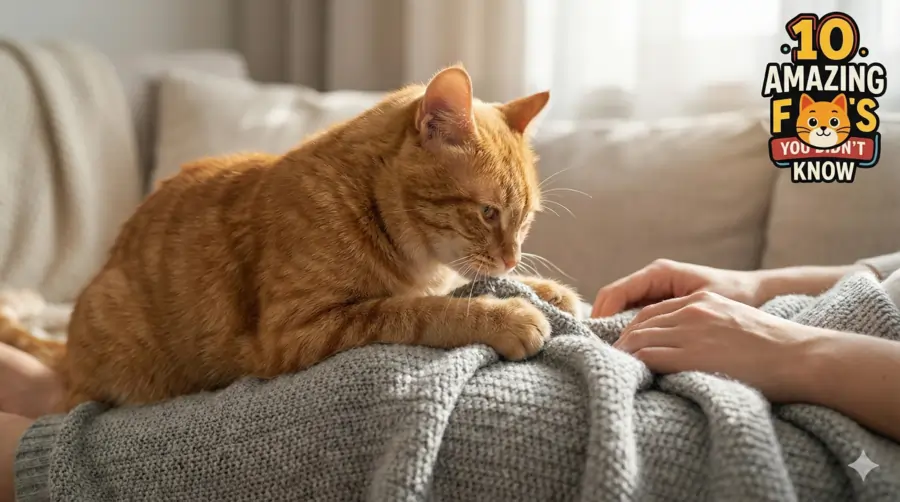
Cats make biscuits on their owners for one main reason: it’s how they show comfort, relaxation, and trust. This behavior goes back to kittenhood, when they knead their mother while nursing, and many cats carry that instinct into adulthood.
Some cats even develop their own ways of communicating—whether it’s certain sounds that resemble “mom” or “mama,” or affectionate behaviors like kneading. When a cat does this to you, it’s a sign that they feel safe and emotionally secure in your presence. They don’t do it with just anyone. Biscuit-making is reserved for the people they trust the most and see as their safe place.
Cats are precise creatures. Every repeated behavior has a purpose rooted in biology, evolution, and learned experience. When a cat presses its paws rhythmically into your lap—commonly described as “making biscuits”—it is not random, playful nonsense, or human-directed theatrics. It is a deeply ingrained instinct with measurable emotional and neurological drivers.
This page provides a comprehensive, evidence-based explanation of why cats make biscuits on their owners, drawing from feline development research, behavioral science, and veterinary insights. The goal is clarity, authority, and accuracy—without folklore, exaggeration, or fluff.
Overview: What This Article Covers
-
The biological origins of cat kneading behavior
-
Why cats knead humans instead of just blankets or beds
-
The emotional meaning behind cat making biscuits
-
The connection between kneading, bonding, and trust
-
Scientific data and expert commentary
-
Common misconceptions and counterarguments
-
What this behavior means for cat owners
-
Frequently asked questions based on real global search data
What Is Cat Kneading Behavior?
Cat kneading behavior is the repetitive motion of alternating front paws pushing into a soft surface. This action mimics the movement kittens perform on their mother’s mammary glands to stimulate milk flow during nursing.
This behavior is neurologically encoded, meaning it does not require conscious thought. Once learned in early life, it remains accessible throughout adulthood.
Key Fact:
Studies in feline developmental behavior confirm that kneading originates during the first two weeks of life and becomes associated with comfort, warmth, and safety.
Why Do Cats Make Biscuits on Their Owners Specifically?
Cats do not knead every surface equally. When they choose a human, the meaning is elevated.
1. Emotional Association and Safety Recognition
When a cat kneads a person, it is transferring a mother-associated comfort behavior onto someone it perceives as a safe figure.
From a behavioral standpoint, this means:
-
The cat feels protected
-
The cat is relaxed
-
The cat has formed a secure attachment
This explains why cats make biscuits on their owners rather than strangers.
Cat Making Biscuits Meaning: The Emotional Layer
Kneading is often accompanied by:
-
Purring
-
Drooling
-
Slow blinking
-
Half-closed eyes
These are not coincidences.
Veterinary behaviorists identify kneading as a self-soothing mechanism. When cats knead, the brain releases endorphins—natural chemicals associated with pleasure and calm.
Emotional Interpretation:
Cat kneading humans = emotional regulation through trust
Why Do Cats Knead and Purr at the Same Time?
The pairing of kneading and purring is biologically efficient.
-
Kneading engages muscle memory tied to nourishment
-
Purring stimulates parasympathetic nervous system activity
Together, these actions place the cat into a low-stress neurological state.
This is why cat kneading and purring meaning is directly associated with comfort—not excitement or play.
Is Cat Kneading a Sign of Affection?
Yes—but affection in cats does not mirror human affection.
Cats express trust through:
-
Proximity
-
Vulnerability
-
Repetition of early-life behaviors
Kneading is one of the strongest indicators of bonding behavior a cat can display.
However, it is not purely emotional. It is also instinctive.
This dual nature often causes confusion.
Cat Kneading Instinct vs. Learned Behavior
There is debate within feline behavior science over whether kneading is instinctual or learned.
The consensus:
-
Instinctual origin
-
Emotionally reinforced through experience
Cats raised without mothers still knead, though frequency may vary. This confirms an innate neurological pattern rather than imitation.
Why Do Cats Knead Blankets and People?
Soft textures trigger kneading reflexes.
Blankets, pillows, and human laps share:
-
Warmth
-
Soft resistance
-
Familiar scent
The addition of a trusted human scent amplifies the behavior.
This explains why cats knead soft surfaces—and why owners experience it more often than furniture does.
Why Do Cats Knead with Claws?
Claws are not extended intentionally to cause discomfort.
Claw extension during kneading occurs because:
-
Muscle contraction engages the digits
-
Cats lack fine motor control to isolate claws during the reflex
This behavior also serves a secondary purpose:
territorial scent marking, as pheromone glands are located in the paws.
What Does Cat Kneading Mean Emotionally?
Emotionally, kneading indicates:
-
Contentment
-
Security
-
Trust
-
Attachment
It does not indicate dominance, dependency, or submission.
Cats knead because the brain recognizes the moment as safe enough to access a vulnerable, juvenile behavior.
Why Do Cats Knead Before Sleeping?
In wild contexts, kneading flattens grass or foliage to create a resting area.
Domestic cats retain this instinct.
Before sleep:
-
The nervous system slows
-
Instinctive nesting behaviors activate
This explains why cats knead before sleeping—even indoors.
Common Misconceptions About Cat Kneading
Myth 1: Kneading means the cat misses its mother
False. Kneading is not a sign of emotional distress.
Myth 2: Cats knead to manipulate humans
False. There is no evidence of intentional behavioral conditioning.
Myth 3: Kneading means hunger
Occasionally true in kittens, rarely in adults
When Kneading May Indicate a Problem
While kneading is normal, excessive or compulsive kneading can indicate:
-
Anxiety
-
Environmental stress
-
Inadequate stimulation
If kneading is paired with:
-
Hair loss
-
Vocal distress
-
Aggressive fixation
A veterinary consultation is recommended.
Real-Life Example
In multi-cat households, cats often knead only one individual. This is not favoritism—it is scent familiarity and trust consistency.
Cats select the most predictable, calm presence.
Future Research and Behavioral Insights
Current feline neuroscience research is exploring:
-
The link between kneading and oxytocin release
-
Long-term behavioral impacts of early weaning
-
Whether kneading frequency correlates with attachment style
Early findings suggest kneading may function as a self-administered emotional stabilizer.
Frequently Asked Questions
Why do cats make biscuits on their owners and not others?
Because owners represent consistent safety, scent familiarity, and emotional predictability.
What does it mean when cats knead you every night?
Nighttime kneading is linked to relaxation and pre-sleep comfort rituals.
Why do cats knead humans more than blankets?
Human warmth, heartbeat, and scent amplify the instinctive response.
Is cat kneading a bonding behavior?
Yes. It is one of the strongest non-vocal bonding signals in cats.
Conclusion
The answer to why do cats make biscuits on their owners is not symbolic or sentimental—it is neurological, emotional, and evolutionary.
Kneading represents:
-
Early-life survival behavior
-
Emotional regulation
-
Trust-based bonding
When your cat kneads you, it is not acting cute.
It is expressing security through instinct.

One thought on “Why do cats make biscuits on their owners?”
Comments are closed.