

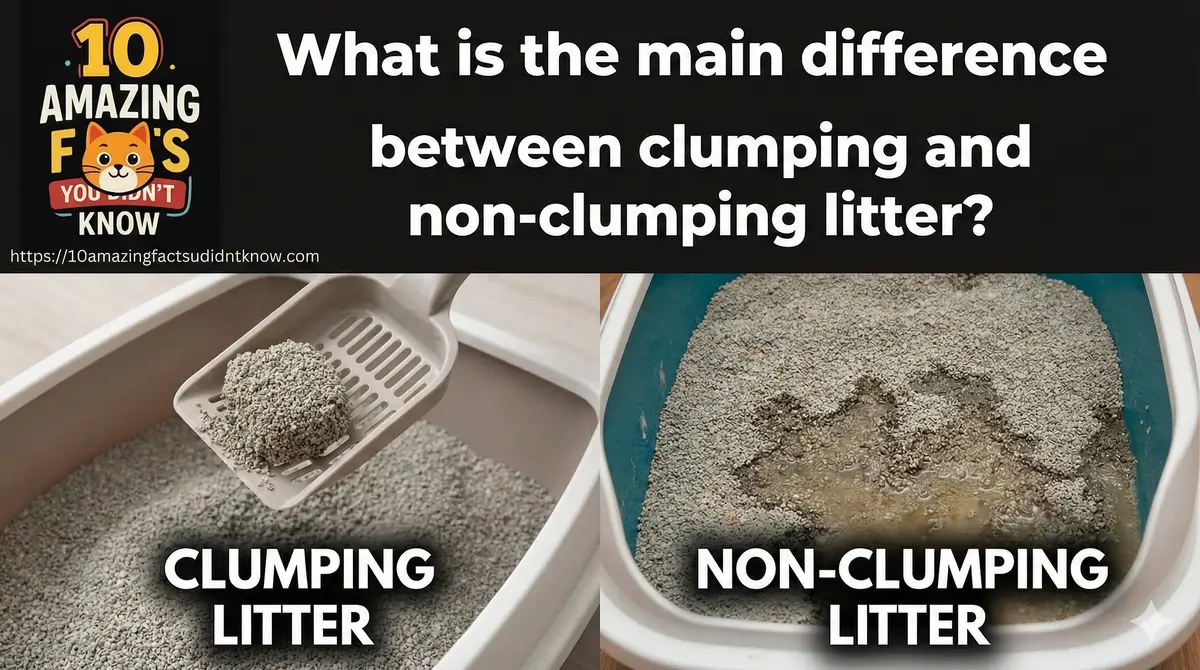
What is the main difference between clumping and non-clumping litter?
What Is the Main Difference Between Clumping and Non-Clumping Litter?
Authoritative guide by 10 Amazing Facts You Didn’t Know About Cats
The Core Difference Explained Clearly
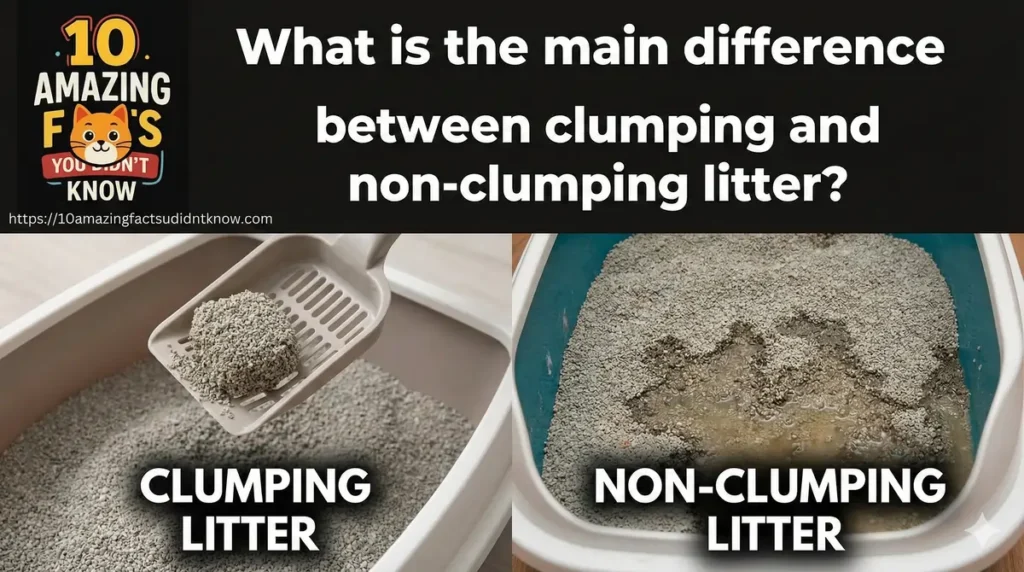
The main difference between clumping and non-clumping litter lies in how each type interacts with moisture.
-
Clumping litter forms solid clumps when it contacts urine, allowing for targeted removal.
-
Non-clumping litter absorbs moisture without forming clumps, requiring full litter replacement more frequently.
That single distinction affects odor control, hygiene, maintenance, cost, safety, and suitability for different cats and households.
What Is Clumping Cat Litter?
How Clumping Litter Works
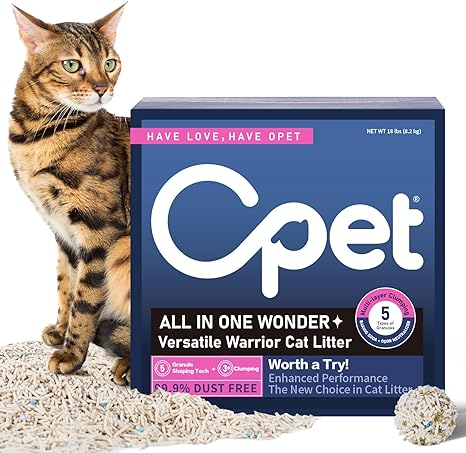
Clumping cat litter is typically made from sodium bentonite clay, a material that expands and binds tightly when wet. When a cat urinates, the liquid is encapsulated into a firm clump that can be removed without disturbing the rest of the box.
Key Benefits of Clumping Cat Litter
-
Superior odor control due to immediate moisture isolation
-
Efficient cleaning—only soiled areas are removed
-
Longer litter life, reducing overall waste
-
Better hygiene in multi-cat households
Veterinary behavior studies consistently show that cleaner litter boxes increase litter box compliance, reducing inappropriate elimination.
Clumping Litter Pros and Cons
Pros
-
Strong odor control
-
Less frequent full changes
-
Ideal for multiple cats
Cons
-
Can be dustier if low quality
-
Not recommended for very young kittens
-
Usually higher upfront cost
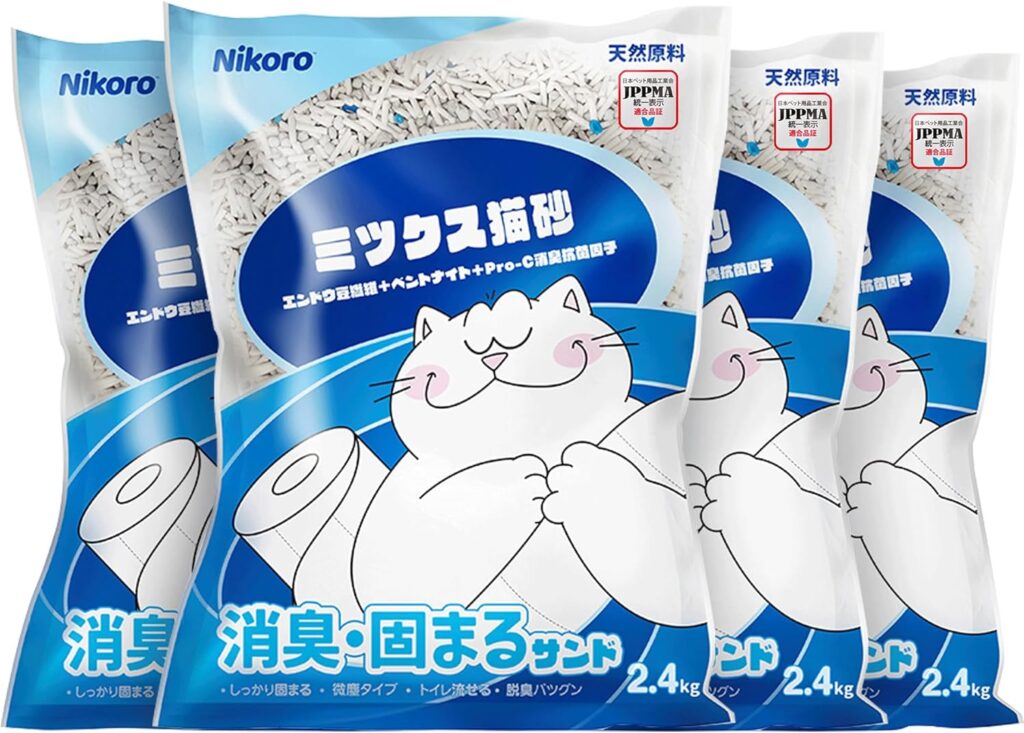
NIKORO Tofu Cat Litter,Strong Clumping Cat Litters,Odor Control and Unscented Ultra Absorbent Water Flushable Bentonite Tofu Cat Litter,Dust Free Scent Free
What Is Non-Clumping Cat Litter?
How Non-Clumping Litter Works
Non-clumping litter absorbs liquid like a sponge. Urine disperses throughout the granules, eventually saturating the box. Odor control depends on absorption materials such as clay, silica, recycled paper, or wood pellets.
Key Benefits of Non-Clumping Cat Litter
-
Lower initial cost
-
Minimal dust in natural or pellet forms
-
Safer for kittens, as it won’t harden if ingested
-
Often lighter and easier to handle
Non-Clumping Litter Pros and Cons
Pros
-
Budget-friendly
-
Lower tracking with pellet styles
-
Suitable for kittens and post-surgery cats
Cons
-
Odor control declines faster
-
Requires frequent full replacement
-
Less efficient in high-use boxes
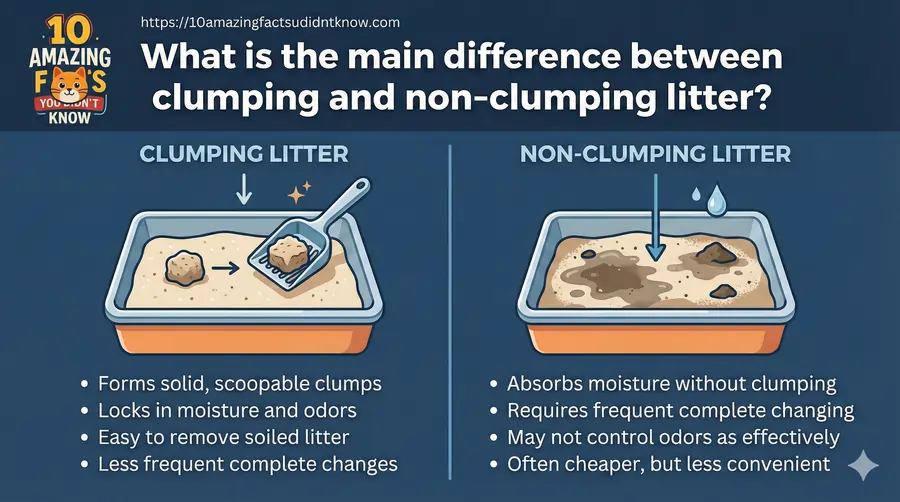
Clumping vs Non-Clumping Litter — Side-by-Side Analysis
Odor Control
Clumping litter isolates urine immediately, making it the leader in odor control. Non-clumping litter relies on absorption, which becomes less effective over time.
Conclusion: Clumping litter wins for odor-sensitive environments.
Absorption and Hygiene
-
Clumping litter absorption is localized and removable.
-
Non-clumping litter absorption spreads moisture throughout the box.
Conclusion: Clumping litter offers superior hygiene with less bacterial buildup.
Dust Levels
Dust depends on quality, not category. Premium clumping litters now rival non-clumping options in low-dust performance.
Tracking
Smaller granules track more easily. Pellet-based non-clumping litters reduce tracking but sacrifice scoop efficiency.
Cost Comparison — Short-Term vs Long-Term
Many consumers focus on purchase price alone. This is a mistake.
-
Non-clumping litter cost is lower upfront but higher over time due to full-box changes.
-
Clumping litter cost comparison shows reduced consumption through selective scooping.
Independent consumer studies consistently show clumping litter costs 10–25% less annually in single-cat households.
Safety Considerations for Cats
Clumping Litter Safety for Cats
Modern clumping litters are safe for adult cats. However, ingestion risks exist for kittens under 8–10 weeks.
Non-Clumping Litter Safety
Preferred for:
-
Kittens
-
Cats recovering from surgery
-
Cats with respiratory sensitivities
Veterinary consensus supports non-clumping litter during early developmental stages.
Best Use Cases by Household Type
Best Clumping Cat Litter For
-
Multi-cat households
-
Small apartments
-
Owners prioritizing cleanliness
Best Non-Clumping Cat Litter For
-
Kittens
-
Budget-conscious owners
-
Cats sensitive to dust
Expert Insight
“Litter box cleanliness directly affects feline behavior. Clumping litter allows owners to maintain hygiene with minimal disruption, which is critical for stress-sensitive cats.”
— Feline Behavior Specialist, Journal of Veterinary Science
Counterarguments and Nuanced Perspectives
Some owners prefer non-clumping litter for environmental or safety reasons. These concerns are valid. However, advances in plant-based clumping litters now address both sustainability and performance, narrowing the gap.
No single litter fits all cats. The correct choice depends on age, health, environment, and owner habits.
Final Verdict
The main difference between clumping and non-clumping litter is functional response to moisture—and that difference drives every other outcome: odor control, cost efficiency, hygiene, and usability.
-
Choose clumping litter for cleanliness, odor control, and long-term value.
-
Choose non-clumping litter for kittens, short-term use, or specific health needs.
An informed choice leads to a cleaner home and a healthier, more comfortable cat.



One thought on “What is the main difference between clumping and non-clumping litter?”
Comments are closed.