

What are some unique facts about cats?
🐾 What Are Some Unique Facts About Cats?
Discover the mysterious world of cats and the mind-blowing facts that make them one of nature’s most fascinating creatures. These graceful beings have walked beside humanity for thousands of years, yet they remain beautifully enigmatic — balancing affection and mystery in ways that continue to mesmerize scientists, historians, and pet lovers alike. From their silent communication and healing purrs to their extraordinary senses and ancient origins, cats are far more complex than their soft fur and charming meows suggest. Every flick of the tail, every midnight zoom across the living room, hides a story written by evolution and instinct — a reminder that beneath their domestic calm lies the heart of a wild hunter.
Whether you’re a lifelong cat parent or simply curious about what makes these animals so captivating, you’re about to step into a world where science meets wonder. At 10 Amazing Facts You Didn’t Know, we dive deep into the facts that reveal the true brilliance behind those mesmerizing eyes. And if you want to experience the world of cats come to life in motion, don’t miss our videos on the 10 Amazing Facts You Didn’t Know YouTube Channel — where every episode turns everyday curiosity into a journey of discovery.
The Fascination Behind Feline Mystique
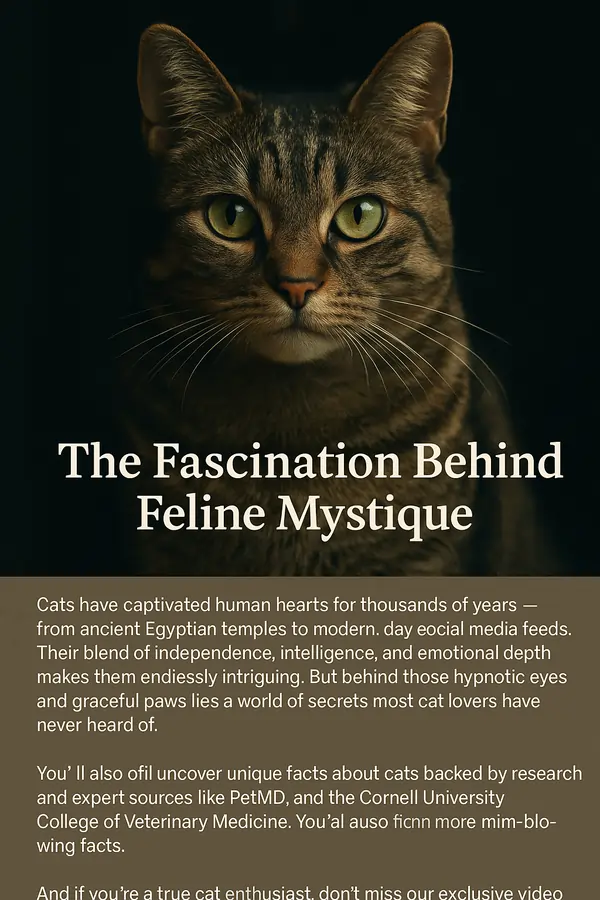
Cats have captivated human hearts for thousands of years — from ancient Egyptian temples to modern-day social media feeds. Their blend of independence, intelligence, and emotional depth makes them endlessly intriguing. But behind those hypnotic eyes and graceful paws lies a world of secrets most cat lovers have never heard of.
In this article, we’ll uncover unique facts about cats backed by research and expert sources like PetMD, the ASPCA, and the Cornell University College of Veterinary Medicine. You’ll also find links to learn more, watch fascinating feline videos, and discover even more mind-blowing facts by subscribing to 10 Amazing Facts You Didn’t Know.
And if you’re a true cat enthusiast, don’t miss our exclusive video breakdowns on our YouTube channel — every episode is packed with fun, science, and stories that will make you see cats in a whole new light.
1. Cats Recognize Their Names — But Don’t Always Care to Respond
Research from the University of Tokyo found that cats can recognize their names, even when spoken by strangers. However, they often choose to ignore them — a behavior scientists say reflects their independent social structure. Unlike dogs, who evolved to depend on humans for survival, cats still retain their self-sufficient nature.
This selective attention doesn’t mean your cat doesn’t love you — it just means they’re thinking, “I’ll come when I’m ready.”
2. A Cat’s Purr Isn’t Just Cute — It’s Healing
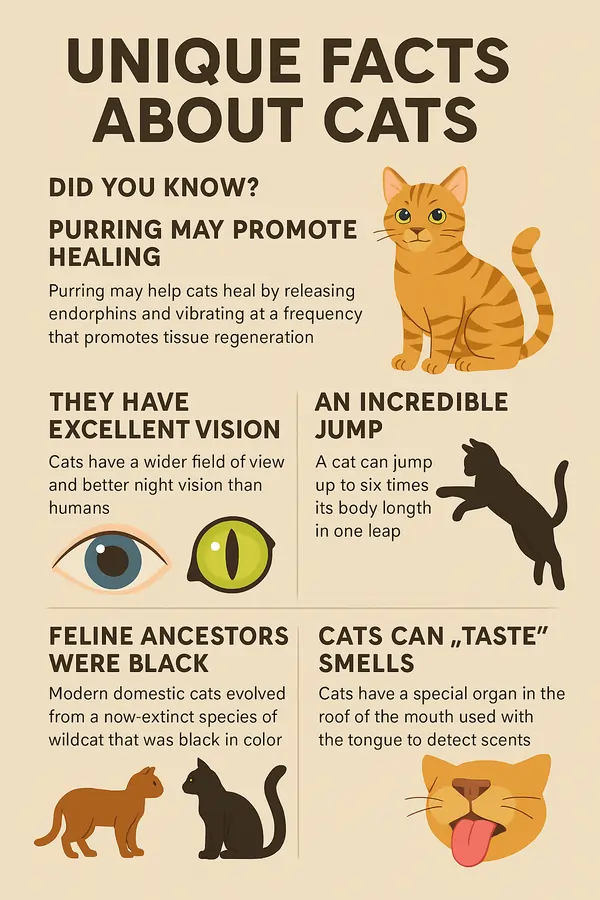
That gentle rumble you hear when your cat curls up beside you is more than a sign of comfort. According to research published in the Journal of the Acoustical Society of America, cats purr at a frequency between 25 to 150 Hertz — the same frequency range used in vibrational therapy to promote bone and tissue healing.
Some experts believe that a cat’s purr can even reduce stress and lower blood pressure in humans. It’s no wonder so many people find their feline companions emotionally healing.
3. Cats Have an Extra Organ to “Taste” Scents
Hidden in the roof of a cat’s mouth is a special structure called the Jacobson’s organ (or vomeronasal organ). This powerful sense detector allows cats to “taste” air molecules — helping them identify potential mates, prey, or threats.
You might have seen your cat open its mouth slightly after sniffing something strange — that’s called the Flehman response, and it’s their way of using this extra sense to analyze the world in a way humans never could.
4. Your Cat’s Whiskers Are Built-In Navigation Tools
Whiskers, or vibrissae, aren’t just cute — they’re incredibly sophisticated sensory tools. Each whisker is connected to a cluster of nerves that helps cats detect tiny changes in air movement, allowing them to judge distances, squeeze through tight spaces, and even hunt in complete darkness.
According to the Cornell Feline Health Center, cutting or damaging whiskers can disorient cats and cause anxiety, which is why they should never be trimmed.
5. Ancient Egyptians Weren’t the Only Cat Lovers
While Egypt famously worshipped cats — even mummifying them — archaeological evidence shows that cats were domesticated in the Fertile Crescent over 9,000 years ago. Studies from the University of Missouri reveal that all modern cats share ancestry with the African wildcat (Felis silvestris lybica).
From sailors who brought cats on ships to protect food stores from rodents, to 18th-century artists who immortalized them in paintings, cats have shaped human history in remarkable ways.
6. Cats Dream, Just Like Humans
If you’ve ever seen your cat twitch, purr, or move its paws in sleep, it’s not random — it’s dreaming. According to the American Animal Hospital Association, cats experience REM sleep (Rapid Eye Movement), the same phase where humans dream.
Scientists believe cats relive their daily experiences in these dreams — perhaps chasing that red laser dot or stalking the bird outside your window.
7. A Cat’s Heart Beats Almost Twice as Fast as Yours
The average cat’s heart rate ranges from 140 to 220 beats per minute, nearly double the average human’s. This high metabolic rate supports their lightning-fast reflexes and agile movements.
Next time your cat suddenly darts across the room for no reason, remember — that burst of energy is powered by one of the most finely tuned bodies in the animal kingdom.
8. Cats Communicate in Over 100 Vocal Sounds
While dogs have about 10 distinct vocalizations, cats boast over 100 different sounds — from chirps and trills to growls and meows. Each sound carries a message, and some studies suggest cats even develop unique “languages” with their owners.
Want to learn how to decode your cat’s mysterious messages? Watch our exclusive cat behavior series on YouTube and uncover how cats use sound, posture, and purring to express their emotions.
9. Black Cats Bring Good Luck in Many Cultures
While superstition in some places paints black cats as bad luck, in Japan and Great Britain they’re actually symbols of prosperity and protection. Sailors often brought black cats on voyages to ensure safe passage and favorable winds.
At 10 Amazing Facts You Didn’t Know, we love breaking myths like these. Subscribe to our YouTube channel and join our community to discover more cultural, scientific, and historical mysteries from around the world.
🐈⬛ Why Cats Continue to Amaze Us
Cats are living paradoxes — affectionate yet independent, mysterious yet expressive, playful yet wise. The more science uncovers about them, the deeper our fascination grows.
At 10AmazingFactsUDidntKnow.com, we dive into the hidden wonders of everyday life — from the animal kingdom to space exploration and beyond.
If you enjoyed this article, support our work and get exclusive content by subscribing here.
And don’t forget to watch our latest videos on YouTube — every view, comment, and subscription helps us bring more amazing stories to life.
🧠 Frequently Asked Questions
1. Do cats recognize their owners’ voices?
Yes. Studies from Scientific Reports confirm that cats can distinguish their owner’s voice from others, even when they choose not to respond.
2. Why do cats bring dead animals to their owners?
Cats have a natural hunting instinct. When they bring prey home, it’s a sign of affection and trust, mimicking how they’d teach kittens to hunt.
3. Can cats really sense earthquakes or danger?
While not scientifically proven, many reports suggest cats can detect subtle vibrations before seismic activity due to their highly sensitive whiskers and paw pads.
4. Why do cats knead with their paws?
Kneading is a comforting behavior from kittenhood — it stimulates milk flow when nursing. Adult cats do it to mark territory or show affection.
5. How long do cats remember things?
Cats have excellent long-term memory, especially for people or routines associated with comfort, food, or affection.
6. Why do cats sleep so much?
Cats sleep up to 16 hours a day to conserve energy — a survival instinct inherited from their wild ancestors who needed to rest between hunts.
7. Are cats smarter than dogs?
Intelligence differs by species. Cats excel in independent problem-solving and adaptability, while dogs are better at social learning and following human cues.
What is an unusual fact about cats?
Can cats see color like human?
How smart are cats facts?
✨ Final Thoughts
Every cat hides a world of wonder within its curious gaze. The more we learn, the more we realize how extraordinary these creatures truly are.
If you loved discovering these unique facts about cats, make sure to:
-
🎥 Join our YouTube community for daily videos that make learning fun
Stay curious — and never stop exploring the world of amazing facts you didn’t know!