
Is clumping litter safe for small kittens?
Is Clumping Litter Safe for Small Kittens? A Comprehensive Veterinary and Behavioral Analysis
The short answer is No. For cats under 4 months old is not safe to use the cumpling litter, you need to wait so the kitten is a little older.
The Critical Question: Is Clumping Litter Safe for Small Kittens?
The transition from a mother cat’s care to independent living is the most vulnerable period in a feline’s life. Among the many decisions a new owner must make, the choice of substrate for the litter box is paramount. A common query among breeders and new owners is: Is clumping litter safe for small kittens?
The short, professional answer is no. For kittens under the age of four months, clumping litter poses significant health risks that can lead to emergency veterinary intervention. This article examines the physiological and behavioral reasons behind this recommendation, exploring the chemical composition of modern litters and the safer alternatives available for developing felines.
The Mechanism of Risk: Bentonite Clay and Ingestion
Most commercial clumping litters are composed of sodium bentonite, a highly absorbent clay. When this material contacts liquid, it expands up to 15 times its original volume, forming a hard, cement-like mass. This property is excellent for waste management in adult cats but catastrophic for a kitten’s internal systems.
Kitten Pica Symptoms and Behavioral Sampling
Small kittens are inherently curious. Much like human toddlers, they explore their environment using their mouths. This behavior, sometimes overlapping with kitten pica symptoms (the urge to eat non-food items), leads many kittens to ingest small amounts of litter.
When a kitten ingests sodium bentonite:
-
The clay enters the esophagus and stomach.
-
It absorbs the natural moisture (mucus and gastric juices) of the digestive tract.
-
The litter clumps inside the intestines, creating a physical blockage.
Understanding Kitten Bowel Obstruction Symptoms
A kitten bowel obstruction is a medical emergency. Because of their small size, a relatively tiny amount of clumping litter can completely occlude the intestinal lumen. Owners should monitor for:
-
Vomiting and inability to keep food down.
-
Lethargy and hiding.
-
Straining in the litter box without producing stool.
-
A distended or painful abdomen.
Comparative Analysis: Clumping vs Non-Clumping for Kittens
When analyzing clumping vs non-clumping for kittens, the primary factor is “clump strength.” Non-clumping litters are typically made of coarser clay or organic materials that absorb liquid without fusing together.
Why Non-Clumping Kitten Litter is the Standard
Professional veterinary guidelines suggest using non-clumping kitten litter until the kitten is at least 12 to 16 weeks old. At this age, kittens have usually outgrown the “sampling” phase and their digestive tracts are larger, reducing the risk of a total blockage from accidental grooming ingestion.
Bentonite Clay Risks Beyond Ingestion
Beyond the risk of internal blockage, clumping litters often produce high levels of silica dust. Small kittens have developing respiratory systems. Constant exposure to fine particulate matter can lead to chronic inflammation or trigger early-onset feline asthma. Selecting a dust-free kitten litter is essential for long-term pulmonary health.
Safe Alternatives: Natural and Biodegradable Options
Fortunately, the market has evolved to provide numerous natural cat litter options that prioritize safety without sacrificing hygiene.
1. Pine Pellets for Kittens
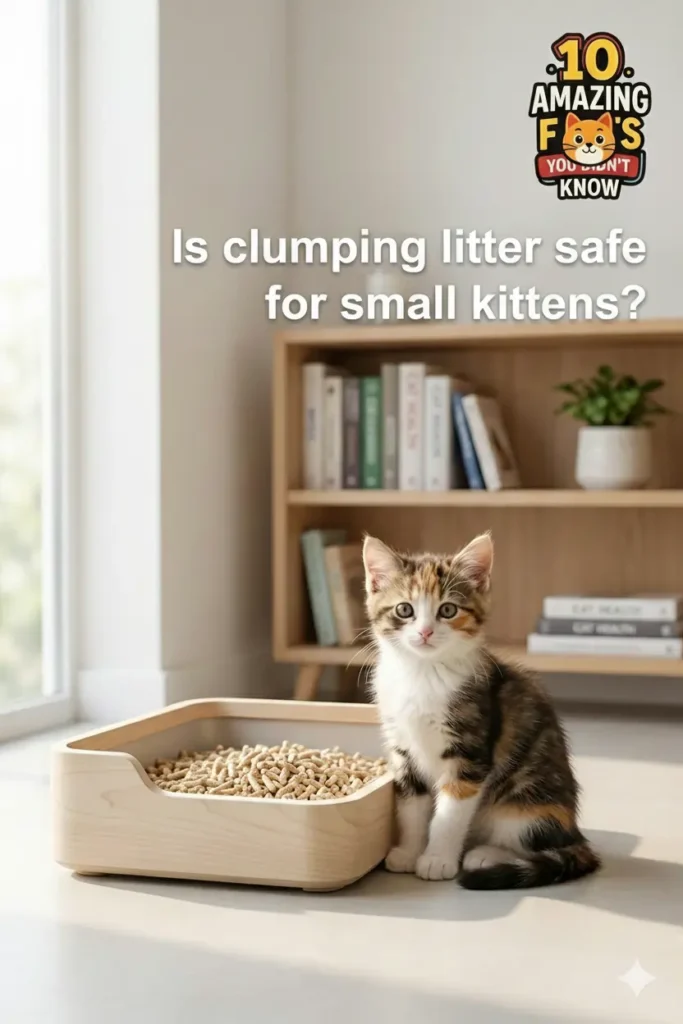
Pine pellets for kittens are arguably the safest and most cost-effective choice. Made from compressed sawdust, these pellets break down into sawdust when wet. They do not clump, they are non-toxic if a single pellet is chewed, and they offer natural odor control through phenols found in wood.
2. Paper Cat Litter
Paper cat litter, usually made from recycled newsprint, is the go-to recommendation for post-surgical recovery and young kittens. It is highly absorbent, produces zero dust, and carries no risk of clumping in the gut.
3. Corn-Based Litter and Wheat-Based Litter
Corn-based litter and wheat-based litter are biodegradable alternatives. While some varieties “clump” naturally using plant starches, these clumps are generally softer and more likely to break down in the digestive tract than bentonite clay. However, they should still be monitored, as they can attract mold (aflatoxins) if kept in humid environments.
4. The Best Litter for 4 Week Old Kittens
For a 4 week old kitten, the risk of ingestion is at its peak. At this stage, use only non-clumping, unscented, and large-particle substrates like paper or large pine pellets to minimize the chance of the kitten swallowing the material.
Professional Insights: Veterinary Consensus
Dr. Alex Perkins, a noted feline specialist, emphasizes that “the convenience of scoopable litter does not outweigh the clinical risks of gastrointestinal stasis in neonates.” Data from emergency clinics suggest that “litter-induced impaction” is a preventable condition that occurs almost exclusively in households using sodium bentonite litters for cats under 12 weeks of age.
Counterarguments and Nuance
Some manufacturers claim their clumping litters are “kitten-safe” due to larger granule sizes. While larger granules may reduce tracking, they do not eliminate the chemical property of expansion upon hydration. In an authoritative view, any substance that expands significantly when wet should be excluded from a kitten’s environment.
Strategy for Transitioning to Clumping Litter
Once your kitten reaches 4 months of age, you may consider transitioning to a clumping variety for easier maintenance. Follow this professional protocol:
-
Observe Behavior: Ensure the kitten has completely stopped “tasting” the litter.
-
Gradual Mix: Start by mixing 25% clumping litter with 75% of their current biodegradable kitten litter.
-
Monitor Output: Ensure the kitten is still defecating normally and showing no signs of respiratory distress from new dust levels.
10 Amazing Facts You Didn’t Know About Cat Litter and Kittens
-
Historical Context: Before 1947, most cats used sand, dirt, or ashes; Edward Lowe “invented” modern clay litter by accident.
-
Expansion Power: Sodium bentonite can absorb nearly 15 times its weight in water.
-
Scent Sensitivity: Kittens have a sense of smell 14 times stronger than humans; heavily scented “floral” litters can be physically painful for them.
-
The “Sampling” Phase: Kittens explore via the Jacobson’s organ in the roof of their mouth, necessitating a safe substrate.
-
Dust Impact: Fine litter dust can travel deep into a kitten’s secondary bronchioles.
-
Biodegradability: Paper and pine litters can often be composted (non-fecal waste only), whereas clay sits in landfills for centuries.
-
Paw Sensitivity: Kittens have extremely soft paw pads; “crystal” litters can be too sharp and cause litter box aversion.
-
Pica Triggers: Sometimes litter eating is a sign of anemia or nutritional deficiency, not just curiosity.
-
Hydration Factor: A dehydrated kitten is at a much higher risk of death if clumping litter is ingested, as there is less fluid to help move the mass.
-
Global Standards: In many parts of Europe, non-clumping wood pellets are the standard for all life stages, not just kittens.
Frequently Asked Questions
At what age can kittens use clumping litter? Kittens should only use clumping litter after they are 4 months (16 weeks) old. This ensures they have passed the developmental stage of eating non-food items.
What happens if a kitten eats clumping litter? It can cause a life-threatening intestinal blockage. The bentonite clay expands in the stomach or intestines, creating a hard mass that cannot be passed naturally.
Is corn litter safe for kittens? Yes, corn litter is generally safer than clay, but non-clumping paper or pine is still preferred for very young kittens.
Can litter dust give my kitten a respiratory infection? While it may not cause an infection directly, it can irritate the lungs and lead to symptoms that mimic an Upper Respiratory Infection (URI) or trigger asthma.
Why is my kitten eating litter? This may be simple curiosity or a condition called pica. In some cases, it indicates an iron deficiency or anemia. Consult a vet if the behavior persists.

One thought on “Is clumping litter safe for small kittens?”
Comments are closed.