
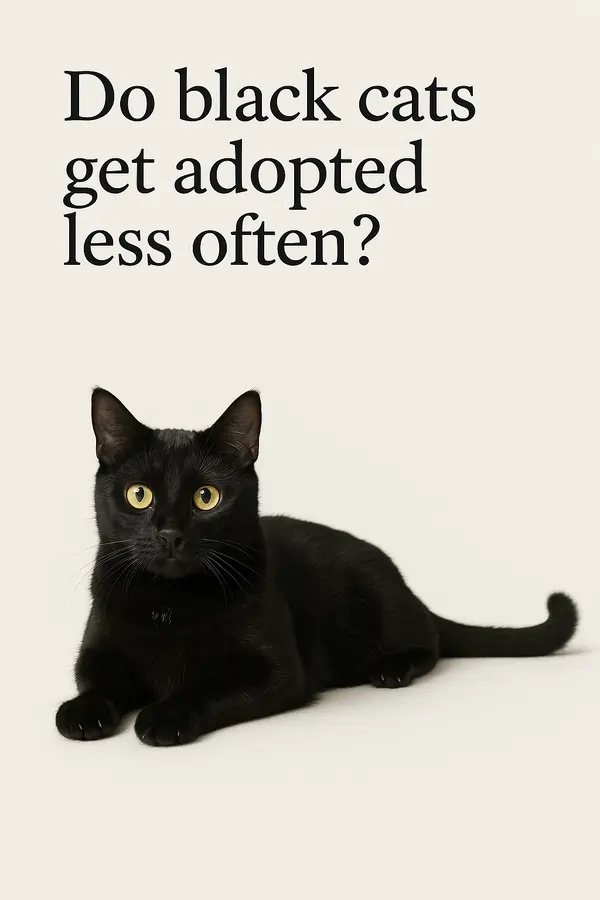
Do black cats get adopted less often?
Do Black Cats Get Adopted Less Often? The Truth Behind the Myth
When you step into an animal shelter, every furry face is hoping to find a forever home. Each meow, each curious glance through the bars of a cage, tells a story of longing and second chances. Some cats stretch their paws toward visitors, eager for attention, while others sit quietly, their eyes filled with hope that someone will notice them. Yet, behind the sea of whiskers and wagging tails, shelter workers and adoption coordinators have observed a pattern that is as puzzling as it is heartbreaking: black cats, despite being just as affectionate and playful as any other feline, often wait longer to be adopted.
The sight of a sleek black cat—whether shyly curled up in the corner of a kennel or confidently pacing back and forth—is not uncommon in shelters. But what is common, sadly, is how frequently they are overlooked. Families walk past their cages, gravitating instead toward tabbies, calicos, or cats with lighter fur that seem to “stand out” more. This isn’t just anecdotal—many shelter staff quietly confirm that black cats can linger for weeks, sometimes months, longer than their counterparts. Some never get chosen at all.
Why Are Black Cats Overlooked in Shelters?
But why? After all, their personalities are no different, and in many cases, black cats are some of the most affectionate and loyal companions you could ever bring home. Is it lingering superstition? Is it the way they’re portrayed in movies and media? Or could it be something as simple as the fact that their dark fur doesn’t always photograph well in adoption listings?
These questions reveal a deeper issue that blends history, culture, and human psychology. The reality is far more complex than just “bad luck.” To truly understand why black cats get adopted less often, we have to look beyond the shelter walls—into the myths, the statistics, and the subtle biases that shape the way people see them.
This article explores the myths, facts, and statistics surrounding black cat adoption, while also uncovering how superstition, media portrayal, and even photography affect their chances of finding a loving family. If you’re passionate about animals, this will not only open your eyes but also give you a chance to be part of the solution.
The History of Black Cat Superstition
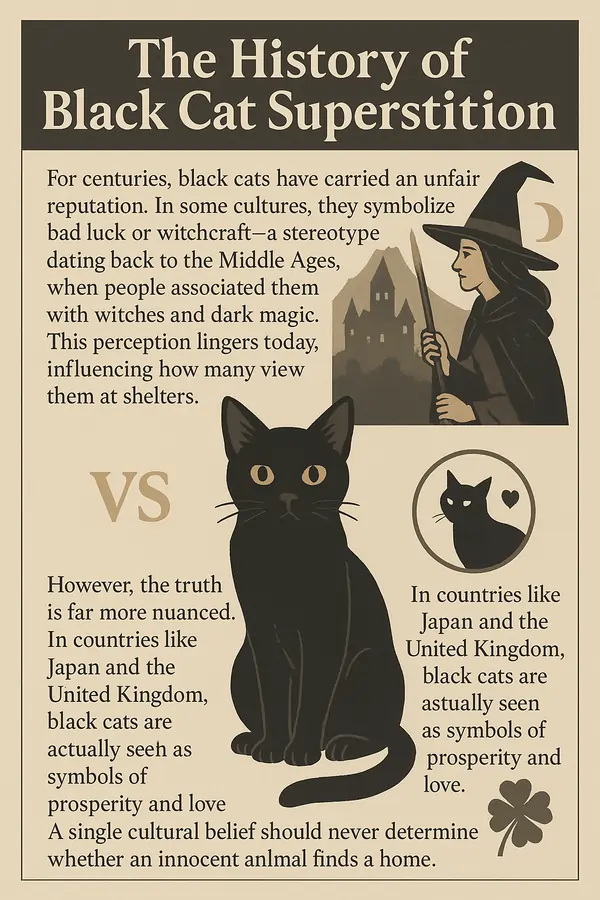
For centuries, black cats have carried an unfair reputation that has been shaped more by myth than by reality. In many Western cultures, they’ve been cast as mysterious creatures tied to misfortune, bad omens, and even witchcraft. This perception traces back to the Middle Ages, a time when superstition was deeply embedded in society. Because black cats were often seen wandering at night, their shadowy presence was linked to secrecy, fear, and the unknown. Religious and social beliefs fueled the idea that they were companions of witches or even witches in disguise. During the infamous witch trials, many black cats were persecuted alongside those accused of sorcery, further cementing the association between dark magic and these innocent animals. Sadly, these outdated ideas have lingered for hundreds of years, shaping the way people treat black cats even today.
Walk into many shelters across the world, and you’ll notice a heartbreaking trend: black cats are often among the last to be adopted. Some potential adopters avoid them due to lingering superstitions, while others think their dark fur won’t look as good in photographs or on social media compared to lighter-colored cats. This means countless black cats remain overlooked simply because of misconceptions that have no grounding in truth. The irony is that these animals are just as loving, playful, and loyal as any other cat, yet they’re judged by the color of their coat.
Celebrating Black Cats: Companions of Love, Beauty, and Resilience
But here’s the twist: not every culture shares this negative outlook. In fact, in many places, black cats are celebrated and adored. In Japan, for example, they are considered symbols of good fortune and are believed to bring prosperity to households. A single woman owning a black cat is thought to attract more suitors, as the animal is said to invite love and happiness into her life. Similarly, in the United Kingdom, particularly in Scotland, black cats crossing your path is seen as a sign of good luck, not bad. Fishermen’s wives would even keep black cats at home, believing they would ensure their husbands’ safe return from sea.
These positive beliefs highlight a crucial truth: how we view black cats is entirely shaped by culture and tradition, not by the cats themselves. They are not inherently unlucky or magical—they are simply cats, deserving of the same kindness, affection, and chance at a loving home as any other feline. Allowing an old superstition to dictate whether an animal is adopted is not only unfair, but it also robs people of the opportunity to bond with some truly wonderful pets.
Adopting a black cat can be a life-changing experience. Their sleek, glossy coats and striking golden or green eyes make them stand out as some of the most beautiful animals you’ll ever meet. Beyond appearances, their personalities shine through—they can be affectionate lap cats, adventurous explorers, or loyal companions who follow you from room to room. Every black cat has a unique story, and adopting one gives you the chance to rewrite history: to turn centuries of prejudice into a future filled with love and companionship.
Adopting a Black Cat: Turning Myths Into Love
It’s time to challenge old myths and celebrate black cats for what they truly are—symbols of resilience, beauty, and unconditional love. Whether you believe they bring luck or simply joy, one thing is certain: they deserve homes where they are cherished, not judged. By choosing to adopt a black cat, you’re not only gaining a loyal companion—you’re also making a statement against centuries of unfair stereotypes.
So, the next time you step into a shelter, don’t let superstition cloud your judgment. Take a second look at that black cat sitting quietly in the corner. You might just find that luck has been waiting for you all along—in the form of a furry, four-legged friend.
Black Cat Adoption Statistics
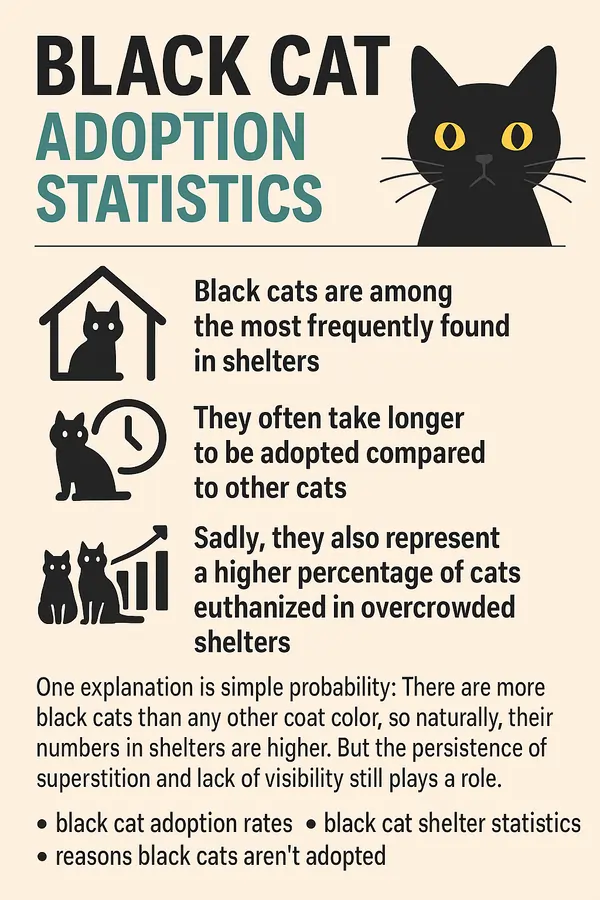
The numbers back up the concern. Studies from the ASPCA and shelter surveys in the United States reveal that:
-
Black cats are among the most frequently found in shelters. https://humanepro.org/magazine/articles/whos-afraid-big-black-cat
-
They often take longer to be adopted compared to other cats.
-
Sadly, they also represent a higher percentage of cats euthanized in overcrowded shelters.
One explanation is simple probability: there are more black cats than any other coat color, so naturally, their numbers in shelters are higher. But the persistence of superstition and lack of visibility still plays a role.
👉 Related keyword integration: black cat adoption rates, black cat shelter statistics, reasons black cats aren’t adopted.
Why Do Black Cats Get Adopted Less?
1. Superstition and Myths
The belief that black cats are unlucky still influences potential adopters. This stigma, often subconscious, makes people overlook these beautiful animals.
2. Media Representation
From Halloween decorations to horror movies, black cats are often portrayed as symbols of mystery, bad omens, or even danger. Compare that to fluffy orange or white cats, which are portrayed as “cute” or “friendly.” Representation matters.
3. Photogenic Challenges
In the era of Instagram and TikTok, appearance affects adoption. Black cats are harder to photograph well—their features don’t always stand out in dim lighting, which makes their shelter profiles less appealing compared to colorful cats.
4. Overpopulation
With their common coat color, there are simply more black cats needing homes, which naturally slows down their adoption rates.
Stories From Shelters: Real-Life Examples
Many rescue workers share stories of black cats being overlooked. One shelter in Florida reported that their black cats were adopted last, even when they were the friendliest in the group. Meanwhile, a shelter in California noticed a spike in black cat adoptions only after a special “Black Cat Adoption Day” campaign, where staff highlighted their beauty and charm.
These anecdotes underline the importance of awareness campaigns and education in breaking adoption stigmas.
The Bright Side: Black Cats Are Just as Loving
Anyone who has adopted a black cat will tell you—they are affectionate, playful, and loyal. Their glossy coats and glowing eyes make them uniquely stunning. In fact, many cat lovers swear black cats have a mysterious yet heartwarming charm that no other pet can match.
Expert insight: Cat behaviorist Jackson Galaxy has said that personality matters far more than fur color, and black cats are often some of the sweetest companions once given a chance.
How You Can Change the Narrative
If you’re considering adopting a cat, here’s why a black cat might be your perfect match:
-
Less competition – You’re giving a home to a cat who might otherwise wait longer.
-
Unique beauty – Sleek, elegant, and mysterious, black cats are striking in appearance.
-
Breaking stereotypes – By adopting one, you’re helping dismantle harmful myths.
📌 Pro Tip: When you share photos of your black cat on social media, use good lighting to highlight their features. This simple act helps change public perception.
Why Supporting Sites Like Ours Matters
At 10 Amazing Facts You Didn’t Know, we dive deep into fascinating topics like this—not just to entertain but to inspire positive change. By subscribing to our site, you help us continue producing high-quality, research-backed content while also gaining access to exclusive facts and insights.
We also share engaging videos on our YouTube channel, designed to educate and entertain. Every subscription and view helps spread awareness about important issues like animal adoption.
👉 CTA: If you believe every cat deserves a home, subscribe today and join our growing community of curious minds and animal lovers.
4. Are black cats friendly pets?
Absolutely. Their personality is no different from cats of any other color. Many owners describe them as especially affectionate.
5. How can I help black cats if I can’t adopt?
You can volunteer at shelters, donate, foster, or simply share adoption campaigns online to raise awareness.
Final Thoughts: Break the Myth, Save a Life
The evidence is clear: black cats are just as loving and adoptable as any other cat, yet they often face adoption delays due to outdated myths and visibility challenges. The next time you—or someone you know—visits a shelter, remember that choosing a black cat could literally save a life that might otherwise be overlooked.
👉 Ready to make a difference? Subscribe to our site, support our mission, and check out our YouTube videos for more eye-opening content. Together, we can rewrite the story of black cat adoption.