

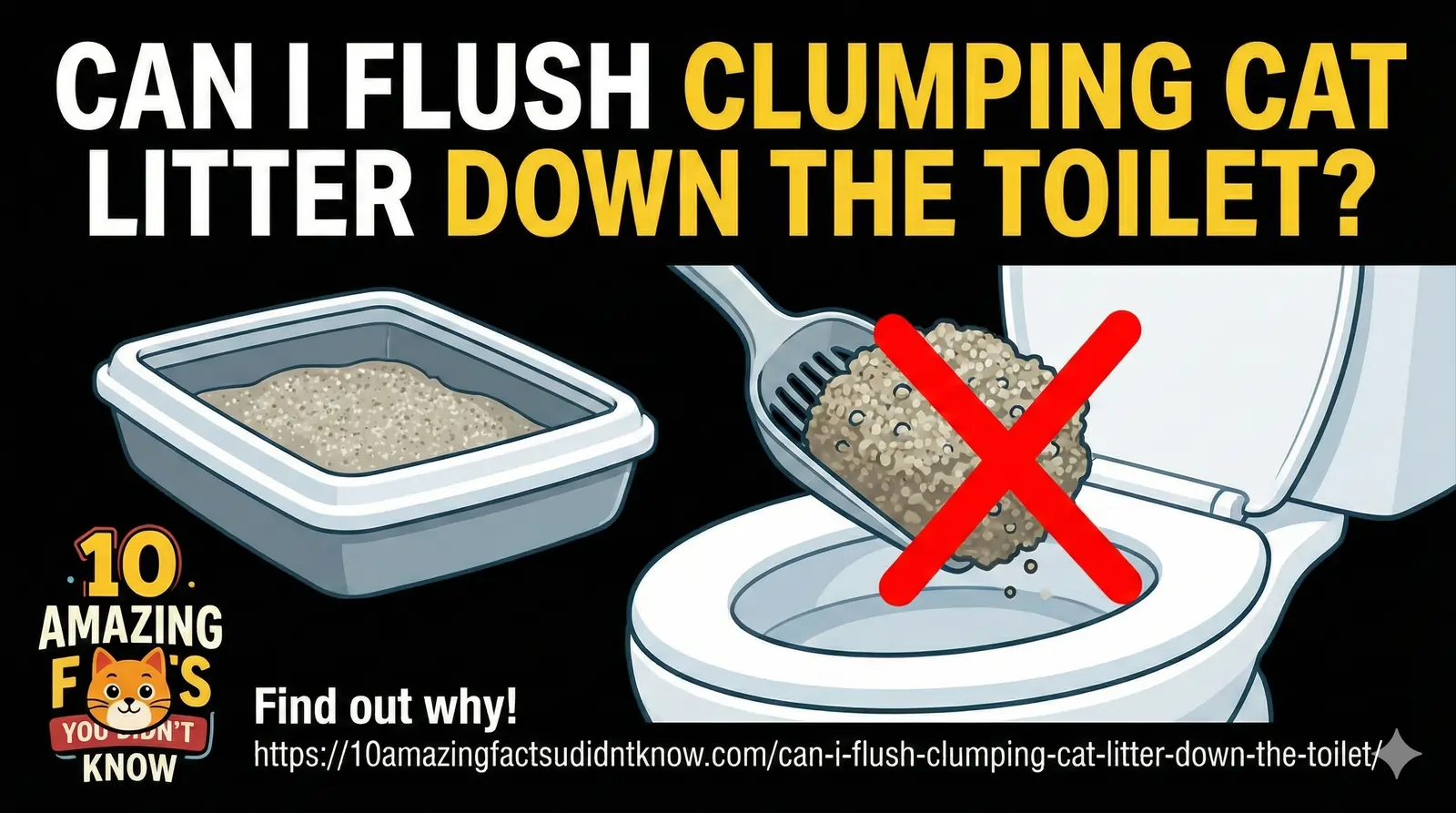
Can I flush clumping cat litter down the toilet?
Can I Flush Clumping Cat Litter Down the Toilet? A Definitive, Fact-Based Answer
Short answer: No.
Correct answer: Flushing clumping cat litter down the toilet is unsafe for plumbing systems, septic tanks, municipal wastewater infrastructure, and the environment.
This guide is written for cat owners worldwide who want a clear, authoritative, and research-driven explanation—without exaggeration, fear tactics, or guesswork. Every claim below is grounded in material science, plumbing standards, and environmental data. If your goal is to protect your home, your community’s wastewater system, and your cat’s health, this page provides the full picture.
Overview: What This Page Covers
Before diving deeper, here is what you will learn:
-
What clumping cat litter is actually made of
-
Why clumping litter behaves very differently in water
-
What happens inside household pipes and sewer lines
-
How flushing cat litter affects septic systems
-
Environmental and public-health risks most owners overlook
-
Legal and municipal considerations worldwide
-
Safe, responsible alternatives for cat litter disposal
What Is Clumping Cat Litter Made Of?
Sodium Bentonite: The Key Ingredient
Most clumping cat litter is made from sodium bentonite clay, a naturally occurring material valued for its extreme absorbency. When sodium bentonite contacts moisture, it expands rapidly, forming dense, cement-like clumps.
This expansion is precisely why clumping litter works well in litter boxes—and exactly why it fails catastrophically in plumbing.
Key property:
Sodium bentonite can expand up to 15 times its dry volume when exposed to water.
That behavior is incompatible with pipes, drains, and sewage systems.
Can You Flush Clumping Cat Litter Down the Toilet?
Technically Possible ≠ Practically Safe
Yes, small amounts of clumping litter may appear to flush without immediate problems. That does not mean it is safe.
Inside pipes, clumping litter:
-
Absorbs water gradually
-
Expands after settling
-
Adheres to pipe walls
-
Traps organic matter and debris
Over time, this creates progressive blockages, not instant clogs—making the damage harder to detect until repairs are costly.
What Happens If You Flush Cat Litter?
Inside Household Plumbing
In residential plumbing:
-
Litter settles in low-flow areas
-
Expansion reduces pipe diameter
-
Repeated flushing compounds buildup
Older homes and narrow pipe systems are especially vulnerable.
In Municipal Sewer Systems
Municipal wastewater systems are designed for human waste and toilet paper only. Cat litter:
-
Does not dissolve
-
Increases sediment load
-
Accelerates pump wear
-
Raises maintenance costs passed to taxpayers
Organizations such as Environmental Protection Agency consistently warn against flushing non-biodegradable solids into sewer systems.
Is Clumping Cat Litter Bad for Pipes?
Yes—By Design
Clumping litter is engineered to solidify when wet. Pipes are engineered to transport dissolvable waste.
These two systems conflict at a fundamental level.
Common outcomes include:
-
Pipe narrowing
-
Slow drains
-
Sewer line backups
-
Emergency plumbing calls
Even professional drain cleaning often cannot fully remove hardened bentonite deposits.
Septic Systems: A Higher-Risk Scenario
Can Clumping Litter Damage a Septic System?
Absolutely.
In septic systems:
-
Clay particles sink and accumulate
-
Tank capacity is reduced
-
Drain fields become clogged
-
Pumping frequency increases
Septic professionals widely agree that cat litter—especially clumping litter—shortens system lifespan and increases failure risk.
“Flushable” Cat Litter: Truth vs. Marketing
Is Flushable Cat Litter Really Safe?
Some products labeled “flushable” are made from:
-
Corn
-
Wheat
-
Paper
-
Pine
Even these materials are only conditionally flushable:
-
Small quantities
-
Modern plumbing
-
No septic systems
-
Compliance with local regulations
There is no international wastewater standard that certifies cat litter as universally flush-safe.
Environmental and Public-Health Concerns
Cat Litter and Wastewater Treatment
Cat feces may contain Toxoplasma gondii, a parasite harmful to marine life and immunocompromised humans. Wastewater treatment plants are not designed to reliably remove it.
Public-health agencies, including Centers for Disease Control and Prevention, advise against flushing pet waste due to environmental contamination risks.
Is Flushing Cat Litter Illegal?
Depends on Location
Many municipalities explicitly prohibit:
-
Flushing pet waste
-
Disposing of non-dissolvable solids
-
Introducing clay products into sewer systems
Violations can result in:
-
Fines
-
Liability for sewer damage
-
Service interruptions
Always consult local wastewater authority guidelines.
Best Cat Litter Disposal Methods (Globally Accepted)
1. Bag and Bin Disposal (Recommended)
-
Scoop waste into sealed bags
-
Dispose with household trash
-
Use biodegradable bags when possible
2. Composting (Limited Use)
Only for plant-based, compost-certified litters
Never compost cat feces for food crops
3. Litter Box Liners
Reduces loose litter escape and improves hygiene
Clumping Litter vs. Flushable Litter
| Feature | Clumping Litter | Flushable Litter |
|---|---|---|
| Water Reaction | Expands & hardens | Breaks down slowly |
| Plumbing Safety | Unsafe | Limited, conditional |
| Septic Safe | No | Rarely |
| Environmental Risk | High | Moderate |
Expert Perspective
Plumbers, wastewater engineers, and environmental scientists consistently agree on one conclusion:
“If it doesn’t dissolve like toilet paper, it doesn’t belong in a toilet.”
This principle remains the gold standard worldwide.
Final Verdict
Can I Flush Clumping Cat Litter Down the Toilet?
No.
Not safely. Not responsibly. Not sustainably.
Doing so risks:
-
Expensive plumbing damage
-
Septic system failure
-
Environmental contamination
-
Legal consequences
Responsible disposal protects your home, your cat, and shared infrastructure.

One thought on “Can I flush clumping cat litter down the toilet?”
Comments are closed.