


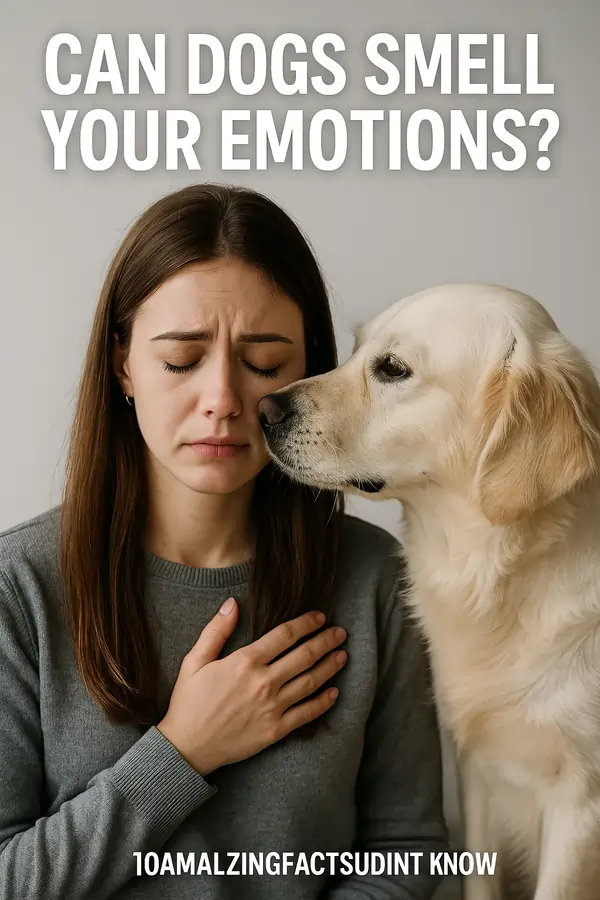
Can dogs smell your emotions?
🐾 Can Dogs Smell Your Emotions? The Fascinating Science Behind Your Dog’s Sixth Sense
Have you ever noticed your dog acting differently when you’re sad, anxious, or excited? Maybe they curl up beside you after a stressful day or wag their tail uncontrollably when you’re in a great mood. This isn’t your imagination — dogs can sense what you’re feeling. But the real question is: can dogs actually smell your emotions?
The answer lies deep in the science of scent, hormones, and the powerful emotional bond between humans and their furry companions.
🧠 How Dogs’ Super-Sensitive Noses Work
A dog’s sense of smell is nothing short of extraordinary. According to PetMD, dogs have up to 300 million olfactory receptors in their noses — compared to about six million in humans. That means your pup experiences the world primarily through scent, detecting things we could never perceive.
Even more fascinating, the part of a dog’s brain that processes smell is about 40 times larger than ours, relative to brain size. This is why dogs can detect certain cancers, drops in blood sugar, and even COVID-19. So yes, it’s entirely possible they can pick up the subtle chemical signals your body releases when your mood changes.
❤️ The Emotional Connection Between Humans and Dogs
Dogs have evolved alongside humans for over 15,000 years, adapting not just to our lifestyles but also to our emotions. Studies from the University of Lincoln show that dogs can recognize and differentiate between human facial expressions and vocal tones, meaning they understand our emotional cues visually and audibly.
When we experience strong emotions — stress, fear, happiness — our bodies release specific hormones and chemicals such as cortisol, adrenaline, and oxytocin. Dogs can smell these changes, linking the scent to the emotion they associate with it. For instance, the smell of elevated cortisol may trigger concern, while oxytocin — the “love hormone” — might make your dog feel calm and connected.
🐶 Can Dogs Smell Fear, Sadness, or Happiness?
Absolutely — and it’s backed by science. Researchers at the University of Naples Federico II conducted an experiment where dogs were exposed to sweat samples from humans experiencing fear or happiness. The dogs’ heart rates and behaviors changed accordingly:
-
When smelling fear, dogs showed stress and sought comfort from their owners.
-
When smelling happiness, they appeared relaxed and eager to interact.
This suggests dogs use scent as a window into your emotional world — a silent language that tells them exactly how you’re feeling.
🌈 Real-Life Examples: How Dogs React to Human Emotions
If you’ve ever cried and found your dog nudging your hand or licking your face, that’s empathy in action. Dogs not only smell your sadness but also feel it through body language and tone.
Service dogs are trained to detect emotional distress in people with PTSD or anxiety, often intervening before a panic attack occurs. They pick up on changes in heart rate, breathing, and pheromone levels, proving how finely tuned their senses are to human emotion.
🔬 The Science Behind “Scented Emotions”
When you experience stress, your body produces cortisol and adrenaline, which are secreted through sweat and skin glands. Dogs, with their incredible olfactory ability, can detect these molecules even in minute concentrations.
Meanwhile, happiness and affection are tied to oxytocin and dopamine, chemicals that create a distinct scent signature. So when your dog cuddles close during your happiest moments, they’re literally inhaling the scent of your joy.
A 2020 Frontiers in Neuroscience study found that dogs process emotional scents in the same area of their brains that interprets visual and auditory emotional cues — suggesting they understand human emotions on a deep, multisensory level.
🐾 Why This Matters for Dog Owners
Understanding that dogs can smell and sense emotions changes the way we interact with them. Your emotional state can influence your dog’s behavior more than you realize.
If you’re anxious, your dog may become restless. If you’re calm, your dog will likely mirror that peace. This is why maintaining emotional balance isn’t just good for you — it’s good for your pet’s well-being too.
So the next time your dog gazes at you with those soulful eyes, remember: they’re not just looking — they’re listening, feeling, and yes, smelling your emotions.
🎥 Want to See This in Action?
At 10AmazingFactsUDidntKnow.com, we explore the science, heart, and hidden wonders of the animal world.
👉 Subscribe to our YouTube channel for fascinating videos about animal intelligence, emotion, and behavior.
Our members get exclusive access to behind-the-scenes videos, expert interviews, and bonus animal science facts that will blow your mind.
✨ Join our premium membership to unlock all content, support our mission, and dive deeper into the amazing world of nature and science.
🐕 Frequently Asked Questions: Can Dogs Smell Your Emotions?
1. Can dogs actually smell human emotions?
Yes. Scientific research confirms that dogs detect emotional states through chemical changes in human scent, particularly hormones like cortisol and adrenaline.
2. How do dogs know when you’re sad?
When humans are sad, we emit different body odors and show subtle behavioral changes. Dogs can smell these cues and react with comforting behaviors, as found in a Biology Letters study.
3. Can dogs sense when you’re angry or scared?
Absolutely. Dogs smell stress hormones and pick up tension in body posture and voice tone. Many will retreat or act submissive when they sense anger or fear.
4. Do dogs understand love or happiness?
Yes — they not only sense your happiness through oxytocin release but also experience increased oxytocin themselves when you pet or smile at them.
5. Are some dog breeds better at detecting emotions?
Working breeds like Labrador Retrievers, German Shepherds, and Border Collies are particularly attuned to human cues due to their close bond with humans over centuries of domestication.
6. How can I strengthen my emotional connection with my dog?
Spend time playing, maintain eye contact, and communicate calmly. Your dog thrives on emotional stability and affection — the stronger your bond, the better they’ll understand your moods.
💬 Final Thoughts
Dogs don’t just love us — they feel us. Their noses act as emotional barometers, picking up our invisible chemical signals and turning them into empathy, comfort, and companionship.

If you found this fascinating, don’t just stop here.
🐶 Subscribe to our YouTube channel and explore more incredible animal facts that’ll change how you see the world.
🌍 And for curious minds who crave exclusive insights, join our premium membership on 10AmazingFactsUDidntKnow.com — where science meets wonder.