

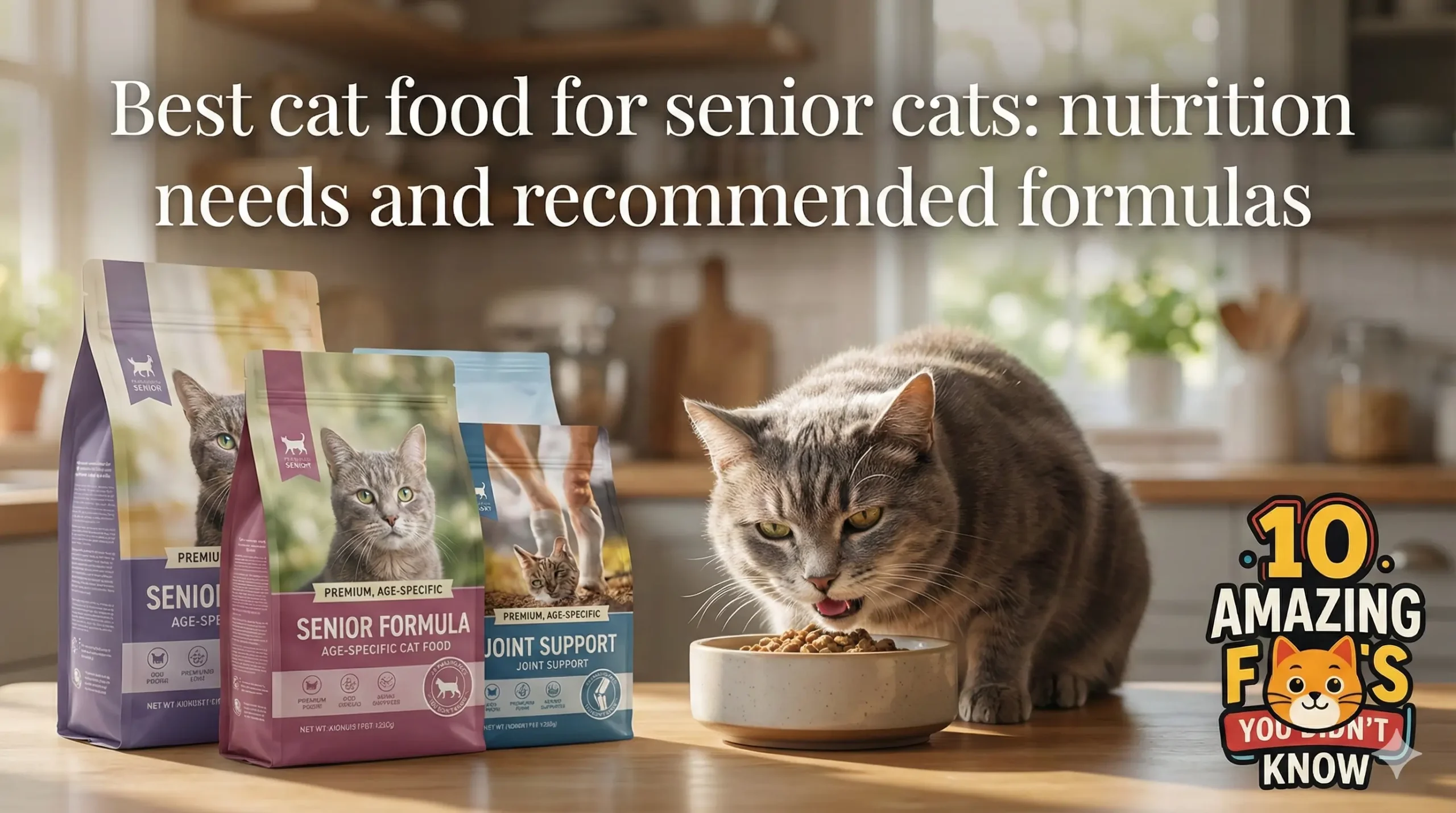
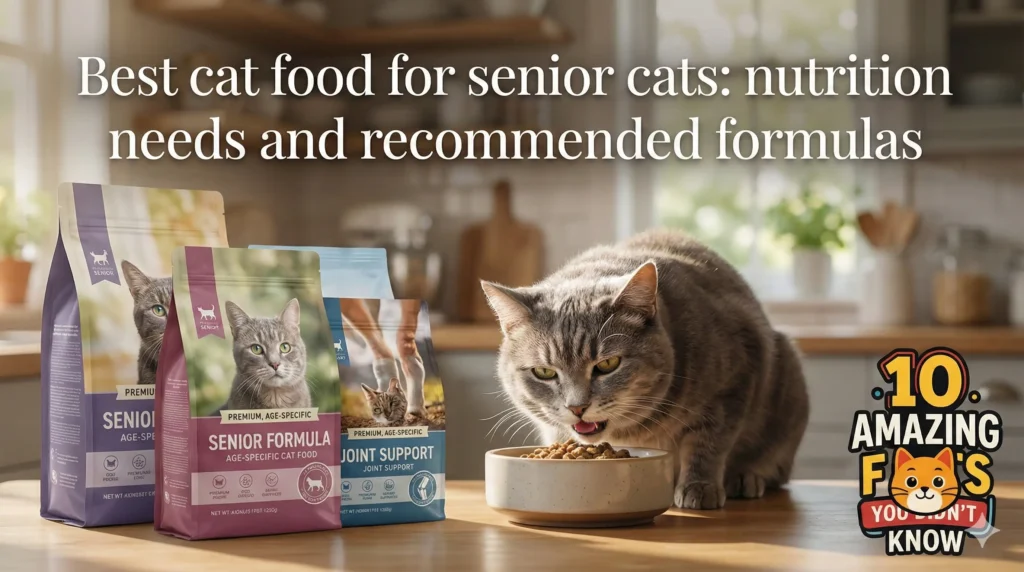
Best cat food for senior cats: nutrition needs and recommended formulas
🐾 Best Cat Food for Senior Cats: Nutrition Needs and Recommended Formulas
Growing older is a natural part of life, and just like us, our cats experience changes in their bodies and behavior as they age. If you’ve noticed your senior cat moving a little slower, sleeping a little more, or showing less interest in playtime, it’s probably time to take a closer look at their diet. Nutrition plays a huge role in helping cats live long, comfortable lives — and choosing the best cat food for senior cats can make all the difference.
At 10AmazingFactsUDidntKnow.com, we’re passionate about uncovering meaningful, science-backed insights that make your pets’ lives better. Today, we’ll explore what your aging feline truly needs, which ingredients to prioritize, and how to choose formulas that keep them healthy, strong, and happy — while also making sure you get real value for your money.
🐱 Understanding Senior Cat Nutrition Needs
Cats are typically considered “senior” around the age of 11, according to the American Association of Feline Practitioners (AAFP). As their metabolism slows and organ function changes, their nutritional requirements shift too. Older cats need more protein, fewer calories, and better digestibility — but not just any kind of protein.
High-quality, animal-based proteins like chicken, turkey, or salmon help maintain muscle mass. According to PetMD, senior cats naturally lose lean muscle over time, and feeding them low-protein diets can actually accelerate this process. So when choosing food, make sure the protein source is clearly labeled (“real chicken” instead of “chicken by-product meal”).
Additionally, senior cats often develop chronic issues such as kidney disease, arthritis, or dental problems, all of which demand nutritional support. That’s where targeted formulations come in — diets rich in omega-3 fatty acids, antioxidants, and joint-supporting nutrients like glucosamine and chondroitin can help them stay mobile and pain-free.
(Source: PetMD – Senior Cat Nutrition)
🐾 Signs Your Senior Cat’s Diet Needs an Upgrade
Not all cat foods are created equal, and not all older cats have the same needs. Here are a few telltale signs that it’s time to rethink your senior cat’s diet:
-
Weight loss or muscle wasting – despite eating regularly.
-
Greasy, dull, or flaky coat, often a sign of missing fatty acids.
-
Reduced appetite – possibly linked to dental pain or digestion issues.
-
Frequent vomiting or constipation, suggesting low digestibility.
-
Lethargy or stiffness, which may benefit from foods with joint support.
If any of these sound familiar, it’s a sign your cat’s current food isn’t doing enough — and upgrading to a formula made specifically for older cats can improve their energy, coat, and quality of life within weeks.
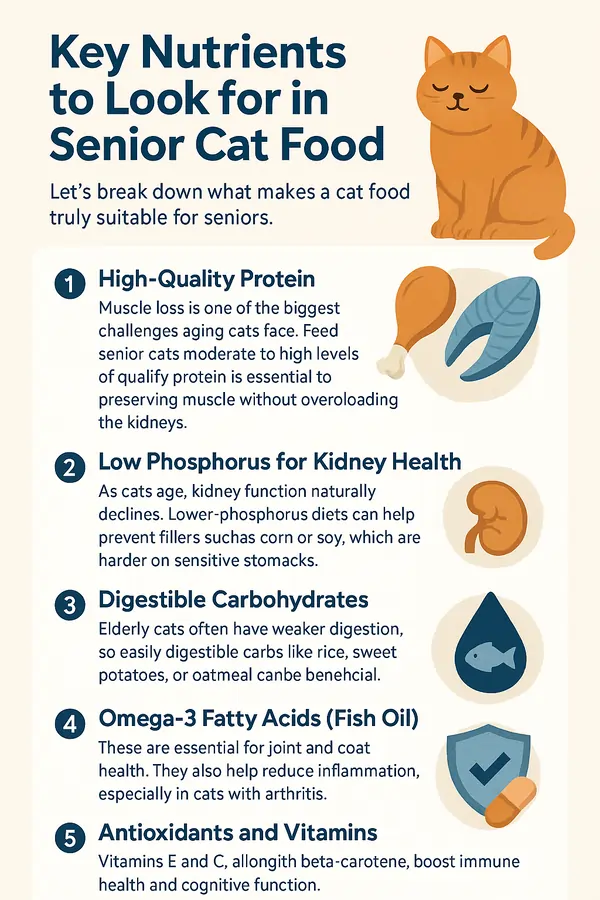
🍗 Key Nutrients to Look for in Senior Cat Food
Let’s break down what makes a cat food truly suitable for seniors.
1. High-Quality Protein
Muscle loss is one of the biggest challenges aging cats face. According to Cornell University’s College of Veterinary Medicine, feeding senior cats moderate to high levels of quality protein is essential to preserving muscle without overloading the kidneys. Look for foods listing meat or fish as the first ingredient.
2. Low Phosphorus for Kidney Health
As cats age, kidney function naturally declines. Lower-phosphorus diets can help prevent further damage. Many vet-recommended foods for older cats, like Hill’s Prescription Diet k/d or Royal Canin Renal Support, are designed with this in mind.
3. Digestible Carbohydrates
Elderly cats often have weaker digestion, so easily digestible carbs like rice, sweet potatoes, or oatmeal can be beneficial. Avoid cheap fillers such as corn or soy, which are harder on sensitive stomachs.
4. Omega-3 Fatty Acids (Fish Oil)
These are essential for joint and coat health. They also help reduce inflammation, especially in cats with arthritis.
5. Antioxidants and Vitamins
Vitamins E and C, along with beta-carotene, boost immune health and cognitive function. Cats, just like humans, benefit from foods that fight oxidative stress.
(Reference: Cornell Feline Health Center)
🐾 Recommended Formulas for Senior Cats (with a Colostrum Boost Option)
Below are several vet-trusted, high-quality senior cat food formulas — plus an optional colostrum supplement you might consider layering in (in moderation) to support immune and gut health in aging cats. Always consult your veterinarian before adding supplements.
🥇 Hill’s Science Diet Senior 11+ Chicken Recipe
-
High-quality animal protein from chicken, ideal for maintaining muscle in older cats.
-
Fortified with taurine, vitamins, and antioxidants to support eye, heart, and immune health.
-
Balanced phosphorus and sodium levels to ease stress on kidneys.
🥈 Royal Canin Aging 12+ Loaf in Sauce
-
Soft, easy-to-chew texture designed for cats with dental sensitivities.
-
Incorporates joint nutrients and controlled calorie density to manage weight.
-
Helps support hydration, which is crucial in later years.
🥉 Blue Buffalo Wilderness High Protein Senior Chicken
-
Grain-free with real meat listed as the first ingredient, plus LifeSource Bits (vitamin & mineral mix).
-
Rich in antioxidants and omega-3 fatty acids to help with inflammation and coat health.
-
Good option for more active seniors who still enjoy movement.
🐟 Purina Pro Plan Prime Plus Senior 7+
-
Vet-formulated to support cognitive and immune health, with proven study backing.
-
Includes omega-3s, prebiotics, and quality protein to encourage digestion and vitality.
-
Often well accepted by picky eaters.
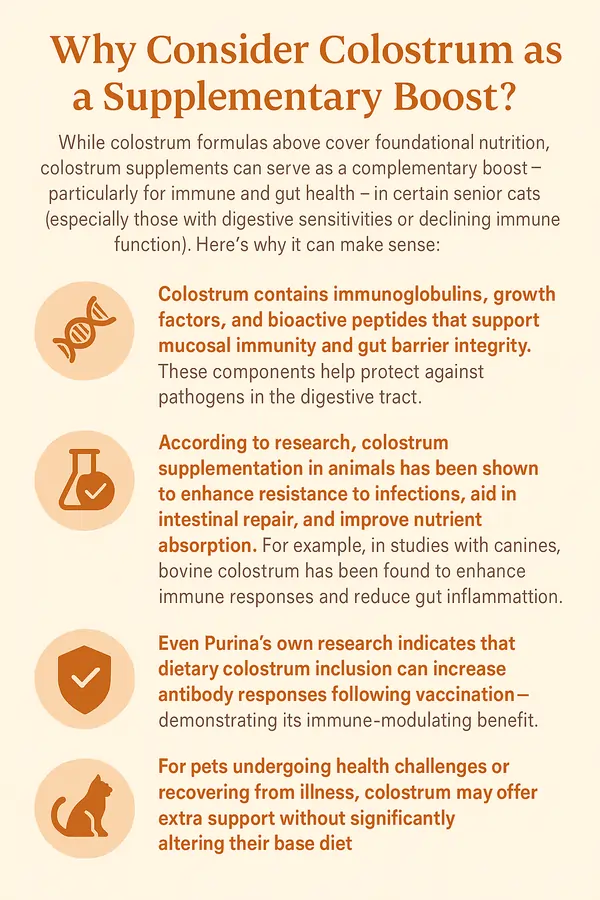
🧬 Why Consider Colostrum as a Supplementary Boost?
While the cat food formulas above cover foundational nutrition, colostrum supplements can serve as a complementary boost — particularly for immune and gut health — in certain senior cats (especially those with digestive sensitivities or declining immune function). Here’s why it can make sense:
-
Colostrum contains immunoglobulins, growth factors, and bioactive peptides that support mucosal immunity and gut barrier integrity. These components help protect against pathogens in the digestive tract.
-
According to research, colostrum supplementation in animals has been shown to enhance resistance to infections, aid in intestinal repair, and improve nutrient absorption. For example, in studies with canines, bovine colostrum has been found to enhance immune responses and reduce gut inflammation. MDPI
-
Even Purina’s own research indicates that dietary colostrum inclusion can increase antibody responses following vaccination — demonstrating its immune-modulating benefit. Purina Institute
-
For pets undergoing health challenges or recovering from illness, colostrum may offer extra support without significantly altering their base diet.
If you’d like to explore colostrum options further, check out this article on the best colostrum supplement for dogs & pets — many of the principles apply across species (with veterinary guidance).
How to responsibly include colostrum with a senior cat diet:
-
Start with a high-quality colostrum product made for pets (or broad-spectrum pet colostrum) from a reputable brand.
-
Use a low dose initially (e.g., ¼ to ½ of the recommended dose for body weight) and monitor for any digestive changes.
-
Add it as a “topper” or mix into wet food rather than replacing balanced nutrition.
-
Watch for improvements in coat, energy, stool quality, or immunity, and always consult your vet before long-term use.
-
Be cautious in cats with certain conditions (e.g. allergies to dairy, renal disease) — though colostrum is low in lactose, sensitivity is possible.
By combining one of the high-quality senior cat formulas with a judicious, vet-approved colostrum supplement, you’re giving your aging feline both the baseline nutrition they need and a targeted boost to immune and gut resilience.
🧡 A Personal Reflection: Why Nutrition Matters More Than Ever
When my 14-year-old cat, Luna, began losing weight even though she was eating the same food she’d always loved, I panicked. My vet explained that older cats simply process nutrients differently — what worked before might no longer meet their needs. After switching her to a senior formula high in protein and low in phosphorus, her coat became shinier, she regained energy, and even her mood lifted.
That transformation reminded me that food isn’t just fuel — it’s medicine, comfort, and love. If you’ve ever shared your life with a senior cat, you know how much they depend on us to keep their golden years comfortable and joyful.
💬 Expert Insight
Dr. Debra Zoran from Texas A&M College of Veterinary Medicine explains,
“Cats are obligate carnivores with a very specific set of nutritional needs. Aging cats, in particular, need energy-dense, high-protein diets that are easy to digest and support organ function.”
That’s why it’s vital to read labels, ask your vet questions, and make choices backed by evidence — not just marketing claims.
🎥 Join Our Feline-Loving Community!
If you love learning surprising, science-backed facts about your pets, don’t miss our videos and expert breakdowns on our YouTube channel.
❓ Frequently Asked Questions
1. What is the best food for senior cats with kidney disease?
Look for low-phosphorus, moderate-protein diets such as Hill’s k/d or Royal Canin Renal Support. These formulas reduce the strain on kidneys while maintaining essential nutrients.
2. Should senior cats eat wet or dry food?
Wet food is generally easier to chew and helps with hydration, which is vital for older cats. However, a mix of both can provide balanced nutrition and dental benefits.
3. How much should I feed my senior cat?
Caloric needs depend on activity level and metabolism. On average, senior cats need 20–30 calories per pound of body weight daily. Always consult your vet before adjusting feeding portions.
4. Is grain-free food better for older cats?
Not necessarily. Unless your cat has allergies or sensitivities, grains can be part of a healthy diet. Focus more on protein quality than grain content.
5. What vitamins are important for senior cats?
Vitamins E, B12, and taurine are crucial for energy, immunity, and heart health. Omega-3 fatty acids also help maintain joint flexibility and coat quality.
6. Can senior cats eat kitten food to gain weight?
While kitten food is calorie-dense, it may be too rich for aging kidneys. Opt instead for a high-protein senior formula recommended by your vet.
7. When should I switch my cat to senior food?
Most cats benefit from senior formulas around age 10–11. However, earlier transitions may help cats showing early signs of aging, such as weight loss or reduced mobility.
❤️ Final Thoughts
Caring for a senior cat means more than just keeping them fed — it’s about nourishing their body and spirit. Choosing the best cat food for senior cats ensures they enjoy every moment of their golden years with strength, comfort, and love.
To stay ahead of every pet health trend and uncover surprising facts that help your furry friends thrive, subscribe now at 10AmazingFactsUDidntKnow.com and join our passionate community of animal lovers.
✨ Your cat deserves the best — and so do you.