

Why do people still believe black cats are bad luck?
Why Do People Still Believe Black Cats Are Bad Luck?
Black cats have long been caught in the middle of human superstition, fear, and fascination. While to many they are simply beautiful animals with sleek fur and piercing eyes, to others they are a symbol of mystery, witchcraft, or even misfortune. But why, in today’s world of science and reason, do people still believe black cats are bad luck? The answer lies in centuries of folklore, cultural traditions, and media representations that have kept this myth alive.
In this article, we will explore the history of black cat superstitions, examine how beliefs differ across cultures, uncover the role of religion and medieval Europe in spreading the myth, and show you why black cats deserve to be celebrated—not feared. If you enjoy discovering fascinating insights like this, don’t forget to subscribe to 10 Amazing Facts You Didn’t Know and check out our exclusive videos for members.
The Origins of the Black Cat Superstition
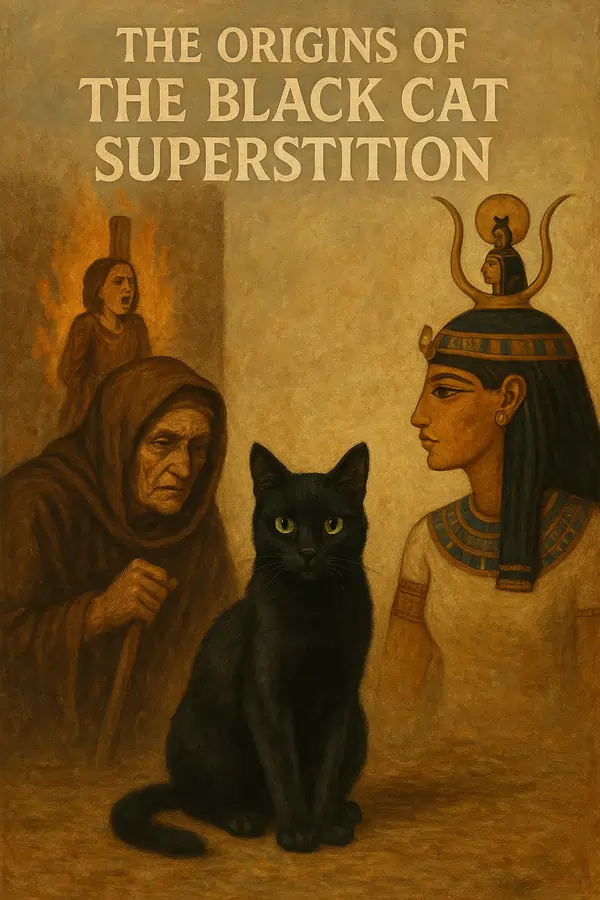
The belief that black cats bring bad luck is not universal, nor is it a recent phenomenon. It can be traced back to medieval Europe, where cats became associated with witchcraft. During the 13th century, the Catholic Church issued statements condemning black cats, suggesting they were familiars—spirits or demons in animal form that helped witches perform magic (source: History.com). This connection was further reinforced during witch hunts, when both women and their cats were burned or hanged as symbols of heresy.
In contrast, some ancient cultures revered cats. In Egypt, cats were sacred animals, worshiped as representations of the goddess Bastet, who symbolized protection and fertility. Killing a cat—even by accident—was considered a grave crime. This contrast between reverence and fear demonstrates just how much cultural perspective shapes superstition.
Cultural Beliefs Around the World
Interestingly, not every society views black cats negatively. In fact, in many cultures, they are seen as symbols of good fortune. For example:
-
Japan: Black cats are believed to attract love and prosperity. A single woman who owns a black cat is thought to attract more suitors.
-
Scotland: A black cat appearing on your doorstep is considered a sign of future wealth.
-
England: Sailors often kept black cats on ships, believing they brought protection and ensured safe travels.
These positive associations stand in stark contrast to the Western idea of black cats as omens of bad luck. It reminds us that superstition is not an absolute truth but a story shaped by cultural values.
The Role of Halloween and Popular Culture
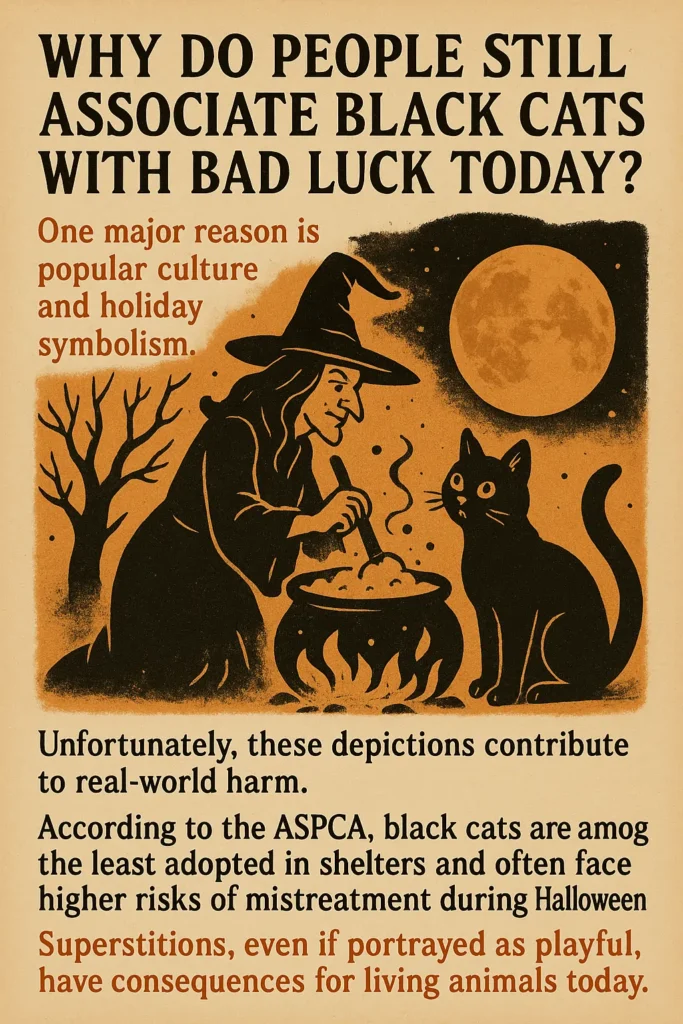
Why do people still associate black cats with bad luck today, when we live in an age of reason? One major reason is popular culture and holiday symbolism. During Halloween, black cats are often depicted alongside witches, cauldrons, and full moons. Movies such as Hocus Pocus and comic books featuring magical felines reinforce the idea of cats as mystical sidekicks.
Unfortunately, these depictions contribute to real-world harm. According to the ASPCA, black cats are among the least adopted in shelters and often face higher risks of mistreatment during Halloween (ASPCA source). Superstitions, even if portrayed as playful, have consequences for living animals today.
Why Superstitions Persist in Modern Times
Superstitions endure because they offer a sense of control in uncertain situations. Believing that a black cat crossing your path can change your luck gives people a story to explain random events—whether good or bad. Psychologists suggest that superstitions provide emotional comfort in stressful or unpredictable circumstances (American Psychological Association).
In addition, traditions are passed down through families. If your grandmother told you to avoid black cats on Friday the 13th, that story becomes part of your worldview, even if you logically know it isn’t true.
The Symbolism of Black Cats Today
Despite the negative myths, black cats are increasingly becoming symbols of empowerment. Many animal advocates celebrate Black Cat Appreciation Day (August 17) and National Black Cat Day (October 27) to counter stigma. On social media, hashtags like #BlackCatsMatter and #AdoptABlackCat help change perceptions.
For many pet owners, black cats represent resilience and misunderstood beauty. They are just as affectionate, playful, and loving as any other cat—if not more.
Why You Should See Black Cats as Good Luck
Imagine this: A black cat curls up on your lap after a long day. Is that misfortune, or comfort and joy? The answer is obvious. Black cats are no different from any other cats, and to those who welcome them into their homes, they often bring good luck in the form of companionship, laughter, and unconditional love.
By shifting the narrative away from outdated superstition, we can celebrate black cats for what they are—unique and wonderful creatures.
Final Thoughts: Break the Myth, Embrace the Truth
So, why do people still believe black cats are bad luck? The answer lies in centuries of storytelling, cultural fears, and repeated imagery. But just because a myth has survived doesn’t mean it deserves to shape how we treat animals today.
At 10 Amazing Facts You Didn’t Know, we believe knowledge is the best way to fight superstition. When you learn the true history behind these myths, you not only see black cats differently, but you also become part of a community that values facts, curiosity, and compassion.
👉 If you found this article insightful, we encourage you to subscribe to our site for access to exclusive stories and deeper explorations into fascinating topics.
👉 Don’t forget to join our YouTube channel for engaging videos that expand on these ideas and share them with your friends.
Your subscription helps us create more educational, entertaining, and fact-checked content, so together we can continue uncovering the truths behind history’s most enduring myths.
FAQs About Black Cat Superstitions
1. Are black cats really unlucky?
No. There is no scientific evidence that black cats bring bad luck. In fact, in many cultures they are considered symbols of prosperity and love.
2. Why are black cats linked to witches?
During medieval Europe, black cats were believed to be companions—or familiars—of witches. This association grew stronger during witch hunts, where cats were often persecuted alongside women accused of practicing witchcraft.
3. Do black cats face adoption challenges?
Yes. Studies from organizations like the ASPCA show that black cats are less likely to be adopted, partly because of lingering superstition and partly due to myths about them being harder to photograph.
4. Are black cats celebrated anywhere?
Absolutely. In Japan, Scotland, and parts of the UK, black cats are viewed as good omens. Modern holidays like Black Cat Appreciation Day also celebrate them worldwide.
5. How can I help change the perception of black cats?
Adopting one from a shelter, sharing positive stories, and supporting awareness campaigns are great ways to challenge old superstitions and promote a more positive image.
✅ Next Step: Subscribe now to 10 Amazing Facts You Didn’t Know and never miss another fascinating story that challenges old myths and brings you closer to the truth.